

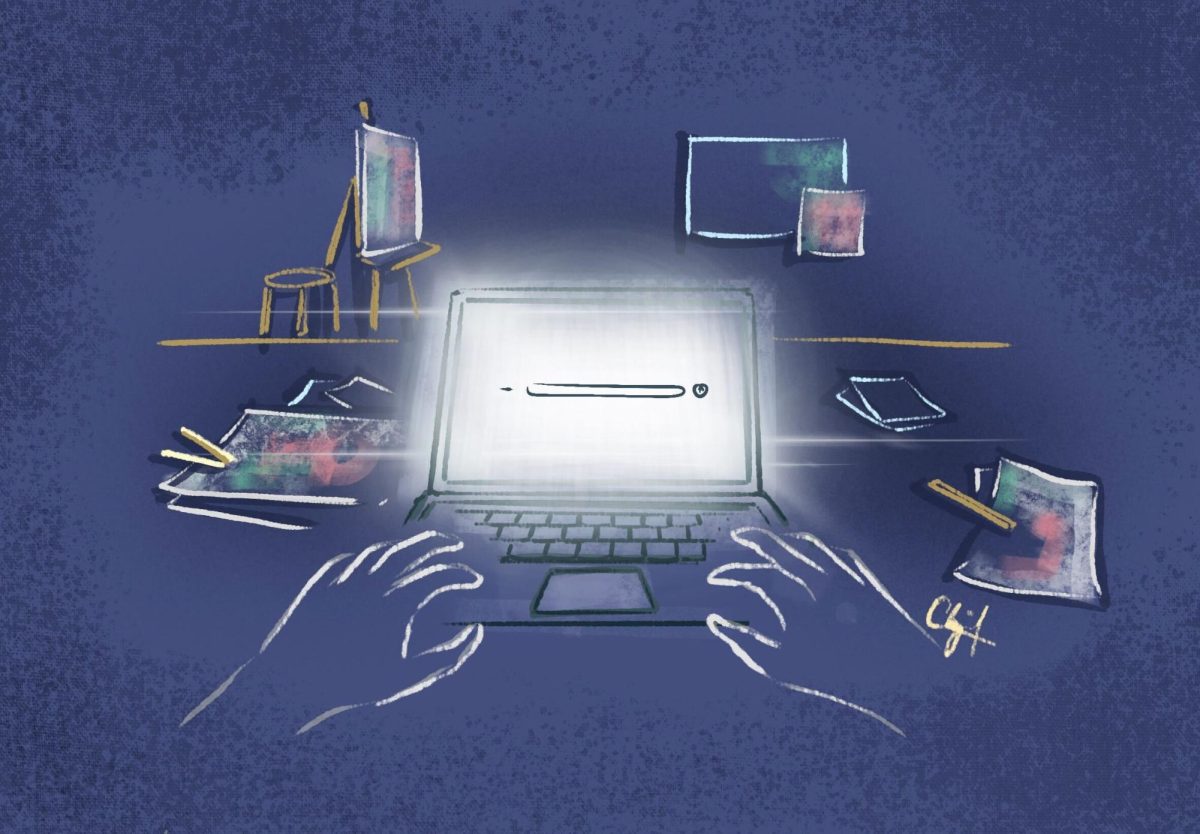
Have you become complicit with artificial-intelligence-generated art, or will you decide to raise awareness about this emerging technology replacing traditional artwork?
Scrolling through AI videos of glass fruit, ordering food from stands with AI mascots, and watching Coca-Cola’s AI-generated 2025 holiday commercials have desensitized many to AI. This technology, amid consumer aversion, has become a leader in marketing and left behind a respected era of human-motivated creativity.
In a struggle between adopting new technological advances and retaining viewership, companies must deliberate on their own policies toward AI in marketing. Small businesses that use generative AI to compete against other companies lack the individuality of established brands curated by human artists. Additionally, large businesses that move away from traditional marketing sacrifice consumer expectations with forgettable campaigns that damage their overall image.
AI-forward mantras may be prevalent in a tech-driven society, but this doesn’t justify using AI over human-created art. The efforts of multimillion dollar companies such as Coca-Cola and Jeep to increase their audience comes at the expense of graphic designers’ and artists’ livelihoods. This acceptance of generative AI to maximize profits disadvantages artists who must now fight to overcome divided public interest, compete with fast-paced systems, and struggle with the lack of job opportunities while attempting to sustain their own practice.
A study by Samuel Goldberg and H. Tai Lam, assistant professors of marketing at Stanford and UCLA respectively, examined the effects of generative AI’s introduction into a stock image market. Their results showed an overall increase in marketplace sales, likely driven by generative AI content substituting traditional art. The rise of cheap imitations on the image marketplace has pushed out many traditional artists. However, generative AI art substitutions endanger the validity of artistry as generative AI allows people to prompt their own images rather than spend years perfecting a craft. Not only is generative AI pushing traditional art out of view, but it uses traditional art itself to achieve this.
AI models are trained on existing visual content to generate new images, sparking conflicts over copyright compensation addressed with the Content Origin Protection and Integrity from Edited and Deepfaked Media Act of 2024. Now, human artists have to compete with rapidly changing content and navigate challenging decisions over copyright ownership.
Generative AI’s prevalence is already leading some companies to incorporate AI with traditional artwork. Regarding UC San Diego’s transportation services advertisement — an AI-generated ad lighting up billboards around Price Center — Assistant Vice Chancellor for Transportation and Activation Josh Kavanagh explained in an interview with The UCSD Guardian that “the ad referenced was created by a member of the Transportation Services team. The team member initially edited an image, which we own the rights to, using several tools in Adobe Photoshop. AI was then used to enhance and add content.” When used this way, AI’s use as a tool could be a method of benefiting artists rather than attempting to replace them.
Every story is inspired by another story, just as paintings imitate life. While some artists seek to adopt AI as a tool for refining their existing artistic skills, they can quickly become reliant on this technology and lose their artistic voice. Generative AI is taught by human-created art, often without the explicit permission of the creator. Any artist incorporating AI as a tool must be aware of its historical biases and root in plagiarism before sacrificing their integrity for a cheap editing tool.
To avoid falling prey to generative AI, we must remain vigilant in the content we choose to consume and aware of how that choice reflects our support of human artists. Even if it’s a seemingly harmless digital poster on campus, take a second to think about who made it. Did a student artist dedicate hours of meticulous work hoping peers would appreciate it on campus, or was it generated by an imitator without an understanding of shared human struggles?




Jordi H • May 19, 2026 at 5:07 am
A.I. s are trained on copyright materials. So are humans.