On April 24 and April 25, Kaibigang Pilipino’s 35th annual Pilipino Cultural Celebration, titled “Walay Huya,” transformed Mandeville Auditorium into a vibrant display of culture, artistic performance, and student talent.
Translating to “Without Shame,” “Walay Huya” served as both the title and thematic foundation for this year’s PCC. Throughout the evening, the phrase took on multiple meanings, from embracing cultural identity and family history to confronting the parts of ourselves and our past that may have been shaped by silence, distance, or shame. Through storytelling, music, and dance, the production challenged the idea that heritage should be hidden, instead encouraging a sense of pride and reconnection with culture.
As the performance moved between traditional, contemporary, and narrative-driven moments, it became clear that “Walay Huya” was designed not just as entertainment, but also as a fully integrated production exploring tension, cultural disconnect, reflection, and attempted reconciliation within a Filipino immigrant family.
That sense of intentionality extended far beyond the stage itself. In her closing speech, PCC co-coordinator and fourth-year Odessa Castillo reflected on the scale of the showcase, noting that the group had been working on this production for 327 days.
The narrative backbone running through the four-and-a-half hour showcase was a mix of prefilmed movie scenes and live performances telling the story of a Filipino immigrant family navigating identity, memory, and generational conflict. The film segments were projected onto a large screen on stage and appeared between live performance pieces, helping to structure the unfolding narrative. Spanning three generations, the story centers on B. B. Flores (Danielle Marie Barrido) as she balances raising her American-born daughters, Raya (Sabrina Aranas McKinnon) and Perlah (Joanne Cacho), caring for her sick mother, Lola B. (Jacylle Aunika), and wrestling with family expectations and traditions as a Filipino immigrant. While both B. B. and Lola B. immigrated from the Philippines, Raya and Perlah were raised in the United States, establishing a tension over culture, family history, and which traditions should be passed down. After a heated disagreement with a curious Raya over these differences, B.B. is whisked back to her teenage years in the 1990s, forced to revisit the memories, sacrifices, and unresolved tensions that led her to distance herself from parts of her heritage.
Dances and musical performances were woven throughout the production, with each piece reflecting and extending the emotional tone of the film and live acting segments to frame the multigenerational narrative in art.
In Pandanggo sa Ilaw, or Dance of Lights, dancers balanced lit candles on their hands and heads while gliding gracefully across the stage. Their controlled balance reflected the emotional fragility and responsibility carried by B.B. in the narrative. The steady glow of the candles added to the atmosphere, creating an elegant and almost dreamlike effect that mirrored the B.B’s position between memory and present-day responsibility, where everything felt carefully held together but still at risk of slipping out of balance.
Second-year dancer Joelle Kaiser reflected on the preparation and care that went into presenting a traditional piece which appeared so effortless on stage.
“I was super intimidated by the use of candles in our dance, but my choreographer, Nevaeh, demonstrated it so effortlessly that I was inspired to really try my best,” Kaiser said.
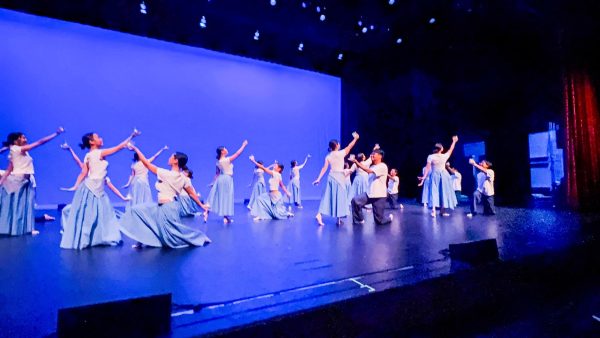
The vocal performances of the showcase added another layer to the show. Following a disagreement between B.B. and Raya about Filipino culture and the parts of their heritage being passed down, “Langit Lupa,” or “Heaven and Earth,” carried the emotional aftermath of that moment into the next chapter of the story. Rather than resolving the conflict, the performance reflected its lingering tension, capturing the sense of distance and uncertainty between the two. The singers stood in semicircles around microphones on stage, dressed in earthy tones, creating a cohesive and grounded visual aesthetic that matched the mood. The performance was accompanied by soft live guitar instrumentation, adding to its stripped-down and intimate feel. Throughout the song, various female soloists took turns leading verses, supported by layered choir vocals that built depth and harmony without overpowering the simplicity of the arrangement.
Alongside these traditional pieces were hip-hop routines and performances of English songs like “The Reason” by Hoobastank and “Rainbow” by REYNE, giving the celebration a modern dimension that reflected the many identities of Filipino American students today. Rather than feeling separate, the traditional and contemporary acts worked together to show how culture continues to evolve across generations.
Among the most recognizable dance performances was Tinikling, a traditional Filipino dance where performers move skillfully between rapidly clapping bamboo poles. Known for its speed and precision, the dance drew enthusiastic reactions from the audience as performers progressed through a series of increasingly complex formations to finally perform blindfolded. As part of the epilogue, Tinikling served as a closing performance that tied the story’s themes back to reconnection and embracing Filipino identity after conflict and reflection.
As the auditorium lights turned back on and the final moments of the show settled, what remained was not just the scale of the production, but the amount of care and collaboration that went into it. “Walay Huya” stood as a reminder of how performance can bring together culture, storytelling, and community in a way that feels both personal and shared.