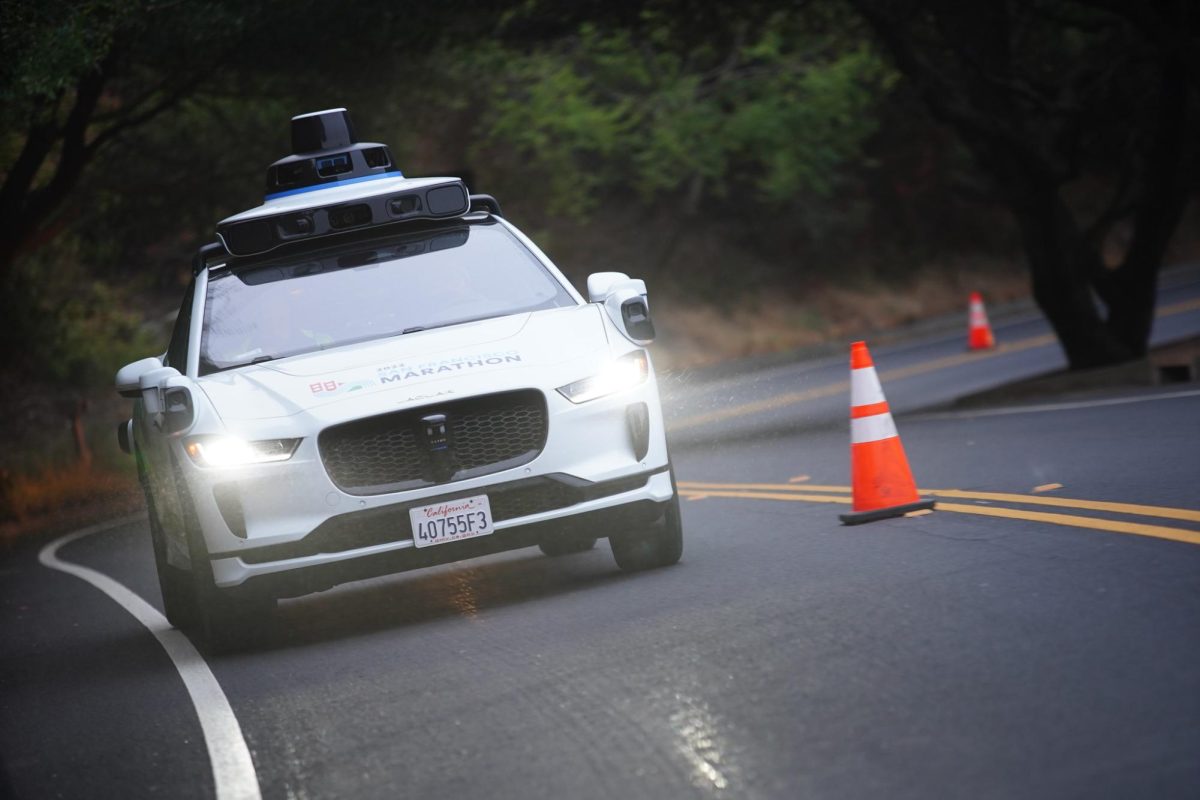
When I returned to campus from spring break, I spotted a rectangular blue car loaded with various sensors cruising around campus: a Waymo.
In a world buzzing with emerging technologies, it’s increasingly important to consider the nuances of technological progress and responsibly weigh its pros and cons. Countless college students and organizations strategize to create the next big-name tech company with even bigger revenue. These desires blind us to the costs; we must ask ourselves if our pursuit of success is worth placing disenfranchised populations in precarious conditions.
So, what does this have to do with Waymo? Waymo promises safety and accessibility, painting an optimistic future for autonomous vehicles. The company claims that its “drivers” reduced serious crashes by around 90%. Even Waymo’s biggest scandal reflects minimal detriment, involving a minor collision where the “driver” reacted much faster than a human could have.
Upon closer examination, however, the invention is simply another reminder of how corporate greed — especially in the form of “tech” — can often be disguised as progress.
The popularization of autonomous vehicles raises serious concerns about job loss. Driving jobs aren’t limited to taxis or rideshare apps. Autonomous vehicles mean delivery, truck, and public transportation drivers are all at risk of losing their jobs. This adds up to the potential unemployment of 4 million Americans, and Waymo does not seem to care. When Waymo and other tech companies frame their efforts as progress, this progress appears to benefit only those who line CEOs’ pockets, not the broader workforce.
In a Boston City Council hearing, council members asked Matt Walsh, Waymo’s regional head of state and local public policy, how Waymo would reconcile its impact on low-wage workers. Walsh vaguely stated: “We are committed to increasing workforce developments and job opportunities within the industry.” Yet, after being pressed for more details, all Walsh had to say was, “I’m not going to sit here and start to speculate what their job opportunities would be.”
The supposed benefits of autonomous cars feel deceptive, given Waymo’s apathy toward low-wage-earning Americans. Communities all over the U.S. share this sentiment and are keen on protecting their workers, including San Diego. City councilmember Sean Elo-Rivera of District 9 opposes Waymo’s expansion in the city.
“These are hardworking people who rely on driving to pay rent, put food on the table, and care for their families,” Elo-Rivera said. “Corporate profit must not come at the expense of people’s livelihoods or our democracy.” Elo-Rivera’s quote aptly captures the problem: In Waymo’s relentless pursuit of profit through innovation, working-class individuals are left in the dust.
Waymo’s disregard for its role in widening wealth gaps and unemployment underscores how companies disguise greed as progress. While autonomous vehicles have the potential to help certain populations, does the large-scale replacement of human workers with robots actually help us? More often than not, it feels like tech companies are pursuing progress just for progress’s sake, changing things up because it might be the next cash grab.
As students, we will shape the future and drive the world forward. In our future endeavors, we must not be distracted by the lure of flashy progress and stay committed to ethical innovation that offers equitable public benefits.