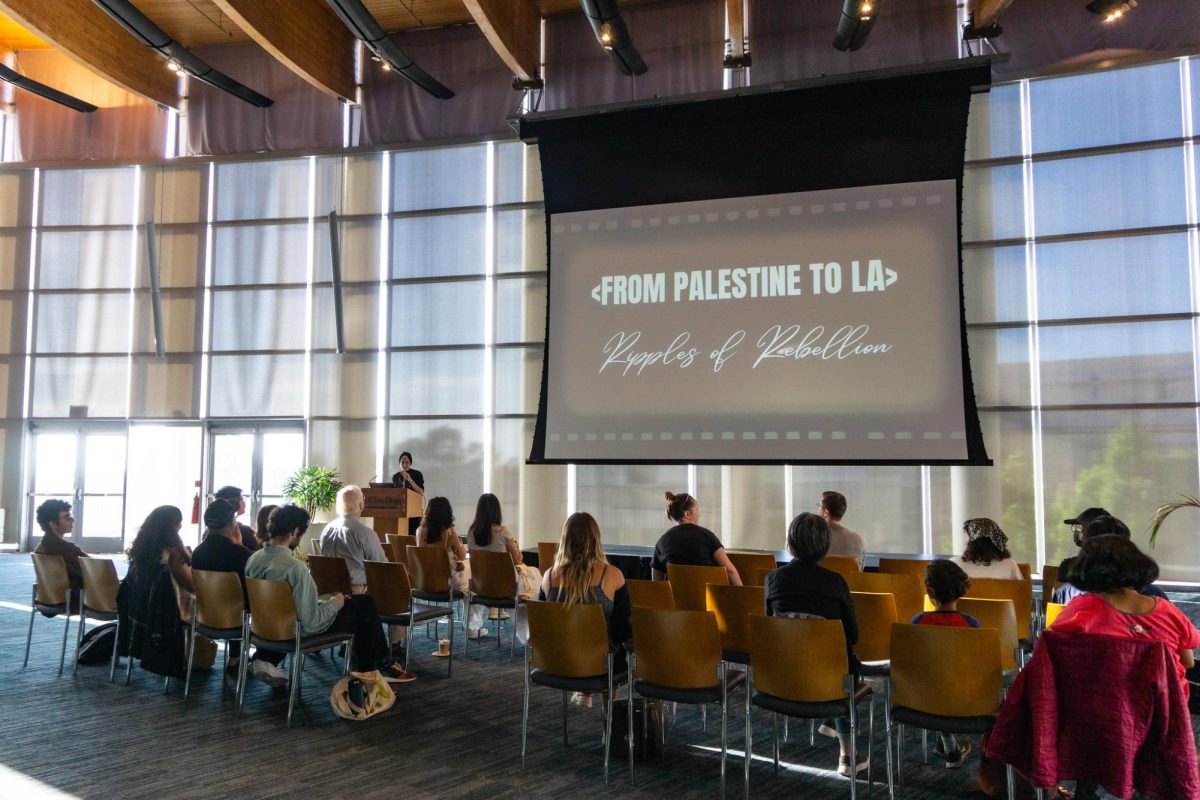
Last Wednesday, the past, present, and future of cinematic society converged for a joint screening of the documentary “L.A. Rebellion: A Cinematic Movement” (2023) and Reem Jubran’s short film “Don’t Be Long, Little Bird” (2025) held by Eleanor Roosevelt College’s Global Forum. The screening was more than a presentation of films — it was an invitation to engage and to reconsider the ways we understand stories beyond our own realities. By placing the two films side by side, the Global Forum demonstrated the thread of resistance and cultural preservation that spans generations and created a space where past struggles and present voices can coexist.
The screening began with the documentary, which covered the L.A. Rebellion, a film movement triggered by the 1965 Watts riots after a white patrol officer arrested Marquette Frye. The documentary focuses on how a group of Black, Asian, Chicano, and Native American UCLA alumni filmmakers from the 1960s and ‘70s persevered through systemic inequality. It spotlights the many students of the L.A. Rebellion and offers these historic filmmakers a platform to share their experiences. Bryant Terrell Griffin, the UCLA alumnus who created the documentary, uses his art to honor the legacy of revolutionary students who came before him. Their influence on the industry opened doors for artists like Griffin himself, making the film particularly moving.
The documentary’s strength lies in how it refuses to minimize the hardships that these artists endure while attempting to break into a predominantly white Hollywood scene. Ethiopian filmmaker Haile Gerima, a leading figure of the L.A. Rebellion who graduated from UCLA in 1976, explained that the members of the collective “graduated into a desert” while their white counterparts “graduated into an industry.” Gerima and his peers did not have the privilege of experimenting with their art and then blooming straight into success — they were consciously building a support system despite their lack of resources.
Tracing the evolution of cinema created by people of color into the modern day shows us just how important the L.A. Rebellion movement was to the creation of ethnic film today. Griffin incorporates clips of archival films from the ‘60s alongside interviews between the UCLA alumni themselves. Griffin also includes behind-the-scenes footage of ongoing film projects at UCLA — including that of Palestinian UCLA film student Jubran creating her short film — intertwining the past and the present. Jubran’s film is contextualized by the broad scale of the documentary, while the story itself focuses on a more emotional, personal perspective.
Juxtaposing fantastical fiction with ancestral memory, Jubran demonstrates that truth in film does not reside solely within the narrative, but is embedded within the methods and intentions of the filmmaker. In “Don’t Be Long, Little Bird,” this truth is found through embodied connections to the past. Jubran interweaves personal stories, familial memory, settler-colonial histories, and Palestinian oral folklore, creating a layered approach to storytelling that is both deeply intimate and politically resonant.
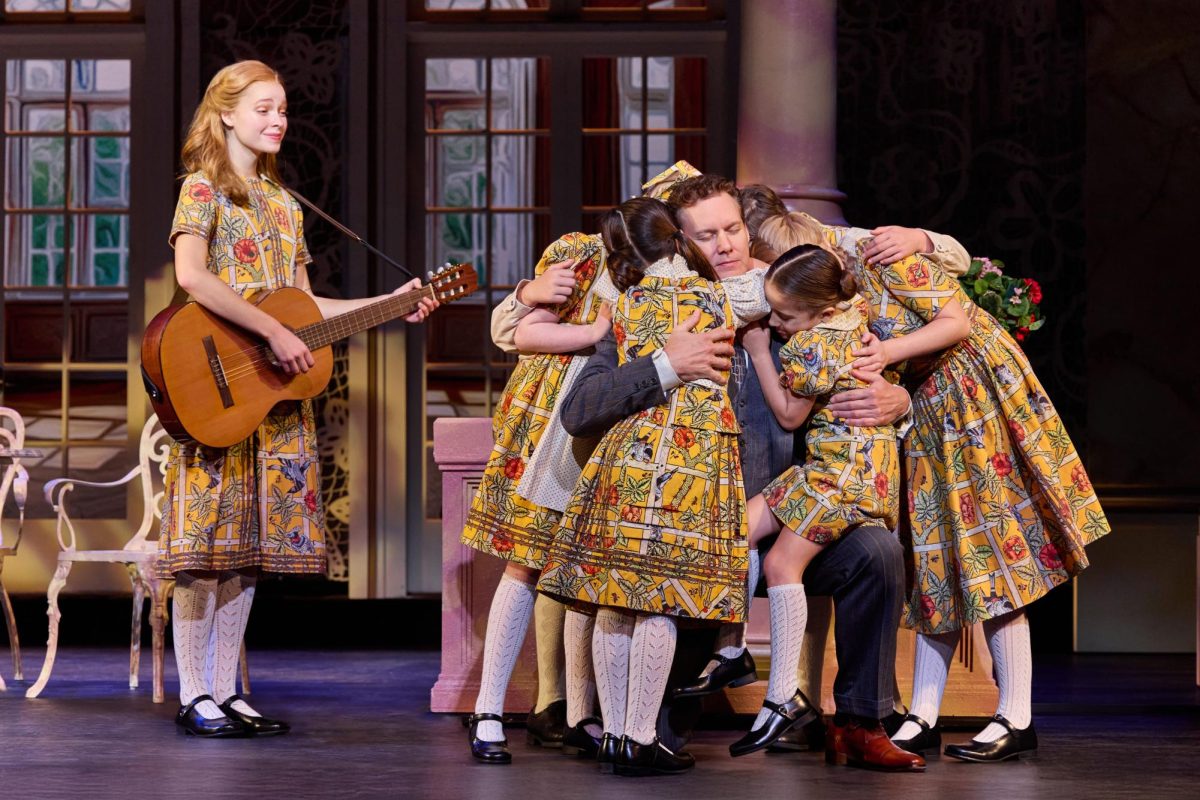
The film tells the story of Rima, a young Palestinian teen caught between conflict with her mother and a history she doesn’t fully understand. She is pulled through a portal into 1930s Palestine, a world she had long been disconnected from. There, on the verge of an arranged marriage, her teenage great-grandmother emerges as a reflection of the bird in the Palestinian folktale “The Little Bird,” which symbolizes femininity and female sexuality and is hunted and shot down as a metaphor for being courted by a man.
With dreams of escaping, her great-grandmother asks Rima to run away, but ultimately chooses to stay in Palestine with her family, even if it means setting aside her own desires. Like the bird, stripped of its feathers but continuing to sing, her choice suggests that her power endures from within, beyond the forces that seek to contain her.
This parallel reinforces the film’s central message: Palestinian women are not merely victims, but the resilient authors of their own stories, challenging the reductive narratives of victimhood imposed by a society that continually silences them.
Although the two films are vastly different cinematic genres, one documenting a historical experience and the other a mythic tale, they share the same core message about finding community. This theme was solidified in a postscreening discussion between the directors during which the audience asked questions regarding their artistic processes. These questions focused on the broader context of filmmaking experiences, asking how their work challenges narratives of defeat imposed on past liberation movements, and how they use film as a form of activism. Jubran and Griffin responded by emphasizing that defeat is not in their vocabulary, and that the work itself is activism — that the stories and their honesty both serve as acts of resistance.
Art is forever changing — the film does not end when its production does. Through the dialogue shared between the directors and audience, they made it clear that the influence of film lies in its capacity to honor lived experiences while also challenging the racial inequalities through the power of solidarity.
Through their commitment to honesty, the integration of personal stories, and powerful cinematic storytelling, these films and their creators illuminate how narratives are not confined to the past, but persist as ongoing conversations that shape the present. Witnessing both the resilience of the L.A. Rebellion filmmakers and the personal reclamation of Jubran’s work confirms that film is not only an outward form of expression, but also a space for connection — one that challenges us to confront our own perspectives and reconsider how we understand others.