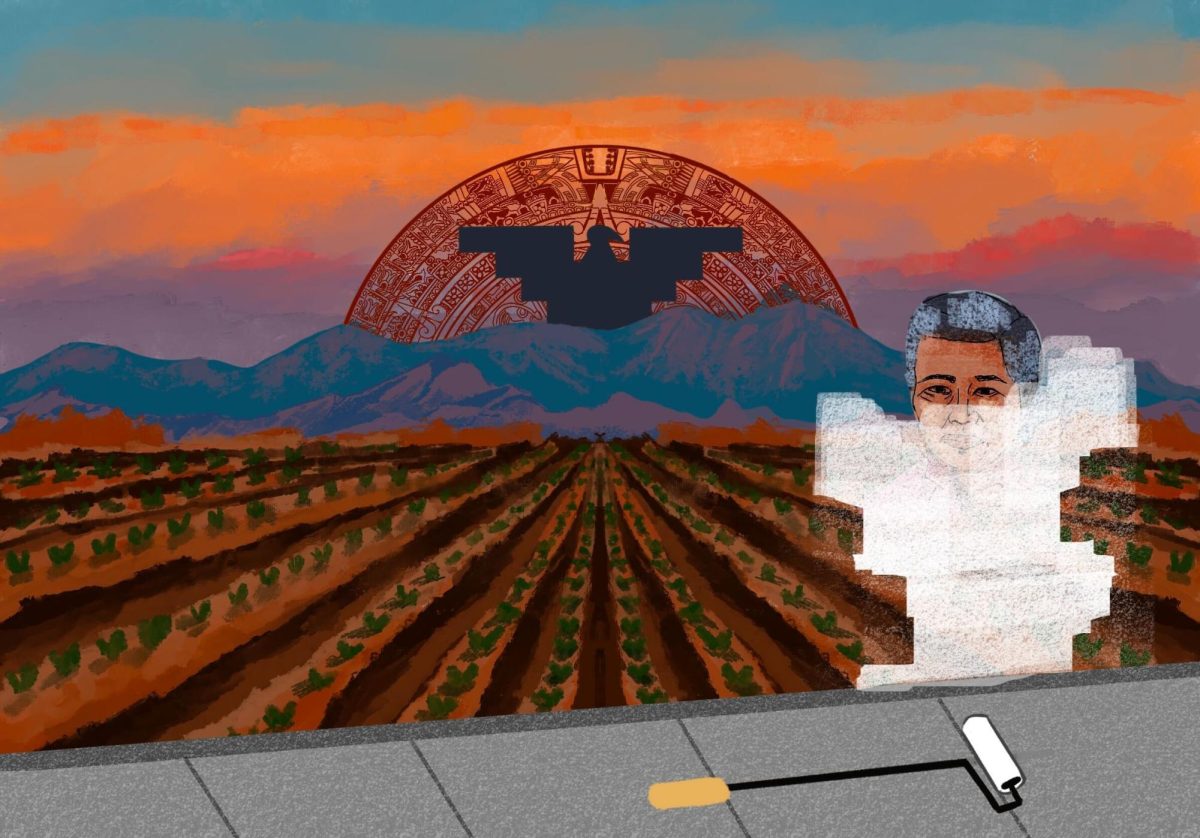
When The New York Times broke the news of César Chávez’s abuse of girls in the Latino civil rights movement in March, I, like many others, felt disgusted. Chávez, who is often credited with playing a pivotal role in the farmworker’s movement, became a legacy activist after establishing the National Farm Workers Association alongside Dolores Huerta. Through monumental demonstrations like the 1965 Delano grape strike and the 1966 march to Sacramento, his reputation became one of heroism and bravery. He very quickly became the face of a movement that awarded his legacy without any criticism. But Chávez was never the sole — nor perfect — example of the farmworkers movement. He was just the most convenient and charming.
Despite reports over the years of Chávez’s “paranoid” leadership entering the latter part of his reign in the ‘80s, some advocates overlooked these signs under the reasoning that his charisma and sacrifice to the cause mattered more. So, while many activists and lawmakers expressed their “shock” and “disappointment” in response to the allegations, I couldn’t help but feel irritated that the mainstream media had ever put Chávez on such a pedestal in the first place.
The five-year Delano grape strike resulted in the first union contracts — a turning point for the farmworkers movement. While Chávez is primarily credited for this effort — being the sole activist pictured signing the pact that ended the strike — it was Larry Itliong, the Filipino leader of the Agricultural Workers Organizing Committee, who organized the effort in the first place. Chávez did not even join the strike until two weeks after it had begun.
When the AWOC and NFWA merged to form the United Farm Workers in 1966, Chávez’s insistence on taking the spotlight away from his allies left Itliong’s efforts unrecognized. Itliong left the movement in 1971, and his family members continue to voice their frustrations against Chávez’s monolith and the erasure of Filipino activists to this day.
Chávez was also “deeply hostile” toward the illegal immigrant population of farmworkers, calling them the derogatory term “wetbacks.” He frequently parroted the narrative that they were stealing jobs and even launched his own campaigns for mass deportations within the UFW. Even prior to the investigation, it seemed inappropriate that our institutions and the mainstream media still used Chávez as a face of the Latino community. He did not speak for the entire community; rather, he spoke only for his niche of supporters during the high-stakes worker activism era of the 1970s.
Miriam Pawel’s 2014 biography explains how Chávez’s cult of personality gave him his power and legacy, allowing him to dodge blame, accountability, and discourse. His supporters viewed him as a saint, not an activist. This mentality of reliance on Chávez’s mythical image held the movement back for so long.
At best, César Chávez is a complicated historical figure that functioned almost primarily as a projected legend of an institution-friendly activist. He was never a hero, and the steps UC San Diego has taken toward recentering the farmworkers movement in celebrating the formerly-named César E. Chávez Celebration Month are the first in acknowledging his role in perpetuating lifetimes of abuse. Activist communities, take this as a cautionary tale — end idolatry.