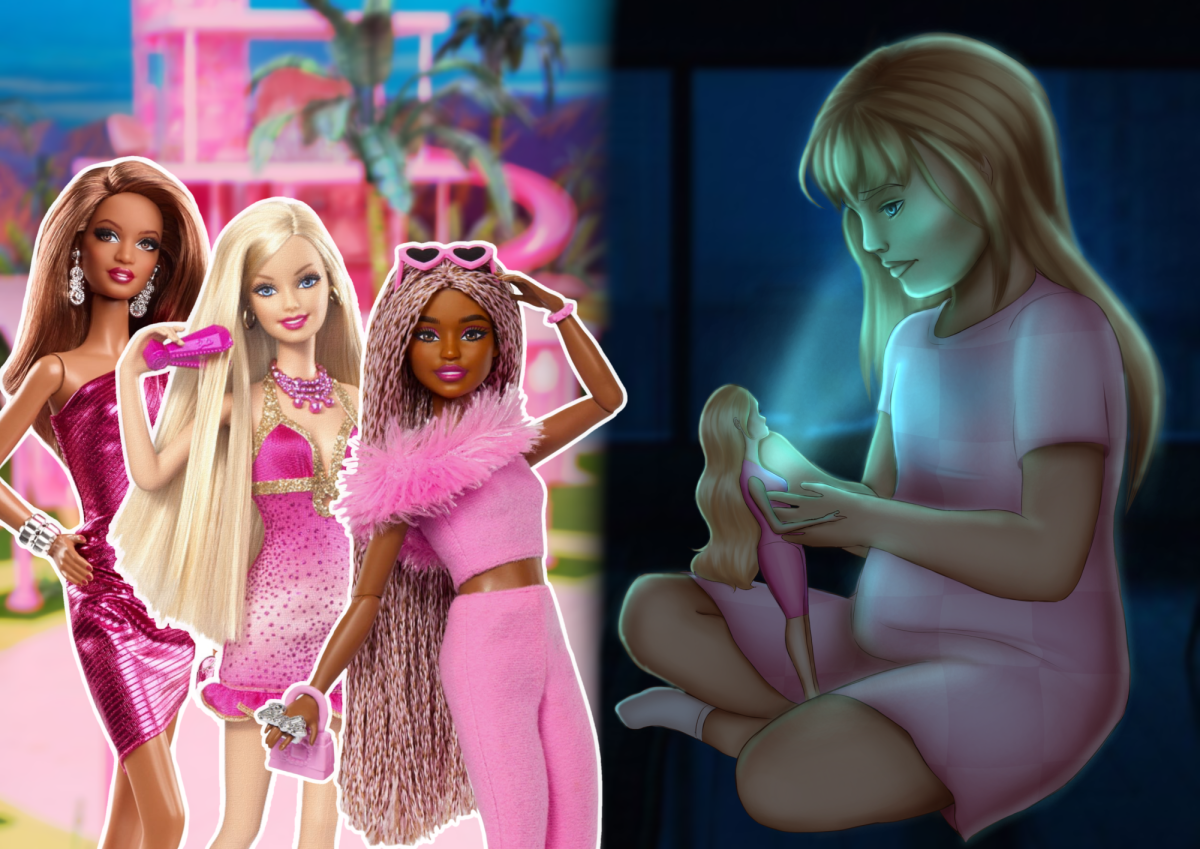
OpenAI and Mattel announced a joint venture bringing AI chatbots to brands like Barbie and Hot Wheels last June, leveraging the “magic of AI” to create new experiences around play. This collaboration is not only shocking news that raises concerns for the future, it’s also a sobering reminder of how far we’ve already fallen.
It should be basic intuition that children and understudied technology don’t mix well. Mattel knows that integrating AI chatbots into toys will have kids more hooked than ever on its products.
Mattel’s goal is to make toys more engaging and attractive to consumers — language very reminiscent of social media algorithms.
Most college students know this evil well. We’ve become addicted to content algorithmically curated for us, even if the content is damaging. Social media’s grip on the youth has already carved a devastating path for attention spans and mental health. Adding AI into the mix will perpetuate these harms and create new paths for dependency.
Chatbots are programmed to exploit developmental vulnerabilities and foster a false sense of intimacy. Concerningly, children and adolescents perceive AI to be more knowledgeable than the people in their lives and thus divulge more personal information to AI than to trusted adults. Even worse, AI is able to give seemingly empathic responses and validating advice; this leads teens deeper into cycles of poor socialization, which are negatively correlated with both mental health and other markers like future income and lifespan.
With so many resources poured into AI’s potential, it’s clear that Silicon Valley wants to capitalize on this ripe moment. I see students using AI for not only homework and essay writing, but also for workout plans, color analyses, and even advice. It’s not a stretch to say some of us are already dependent on and comforted by AI. Now, imagine if this dependency had formed in childhood.
For children, human-to-human relationships are crucial for social, cognitive, emotional, and even biological maturation. While the exact effects of these new AI-powered toys and the resulting parasocial relationships are not yet completely known, they are likely to be highly damaging to healthy development.
We need to learn from the devastation caused by social media. By allowing AI to permeate toy aisles, we prioritize profit-seeking inventions over the wellbeing of our future generations.
On the “This American Life” podcast, a guest tells the story of how, as a child, her friend saw her father swapping out the tooth under her pillow for money. Instead of realizing the tooth fairy wasn’t real, she started telling all her friends that her dad was the tooth fairy.
Children are unable to distinguish between reality and play. With Barbie’s newfound ability to chat back, “she” might literally become your child’s best friend.