

Protein is no longer just part of a balanced diet; it has become the sole criterion for healthy eating. A few weeks ago, I came across a blue-raspberry-flavored sparkling water at Target. The label flaunted 20 grams of protein for only 80 calories — because, of course, even water needs to contribute to a daily protein goal.
For the past decade or so, grocery aisles have increasingly marketed protein bars, cookies, chips, and drinks as “healthy” because they are “high protein.” Balanced meals with fiber, carbohydrates, fats, and whole foods have taken a backseat amid the protein craze.
There is a real problem with how most Americans eat today, and it is important to work toward improving dietary habits. Health Secretary Robert F. Kennedy Jr.’s “Make America Healthy Again” campaign attempts to solve this problem by promoting a return to “real foods” and characterizing protein intake as a marker of healthy eating. However, the core issue of Americans’ diets is not a lack of protein; rather, it is the overconsumption of highly processed foods and lack of balanced meals. Protein is undoubtedly a crucial aspect of a healthy diet, but elevating one macronutrient as a universal solution oversimplifies a larger problem.
When protein overshadows vegetables, whole grains, and micronutrients, people miss out on fiber and other vitamins that are essential for our health. Diets that are consistently low in fiber and plant-based nutrients have been associated with higher chances of cardiovascular disease and colorectal cancer. Nutrition guidelines have to focus on balance instead of a singular macronutrient.
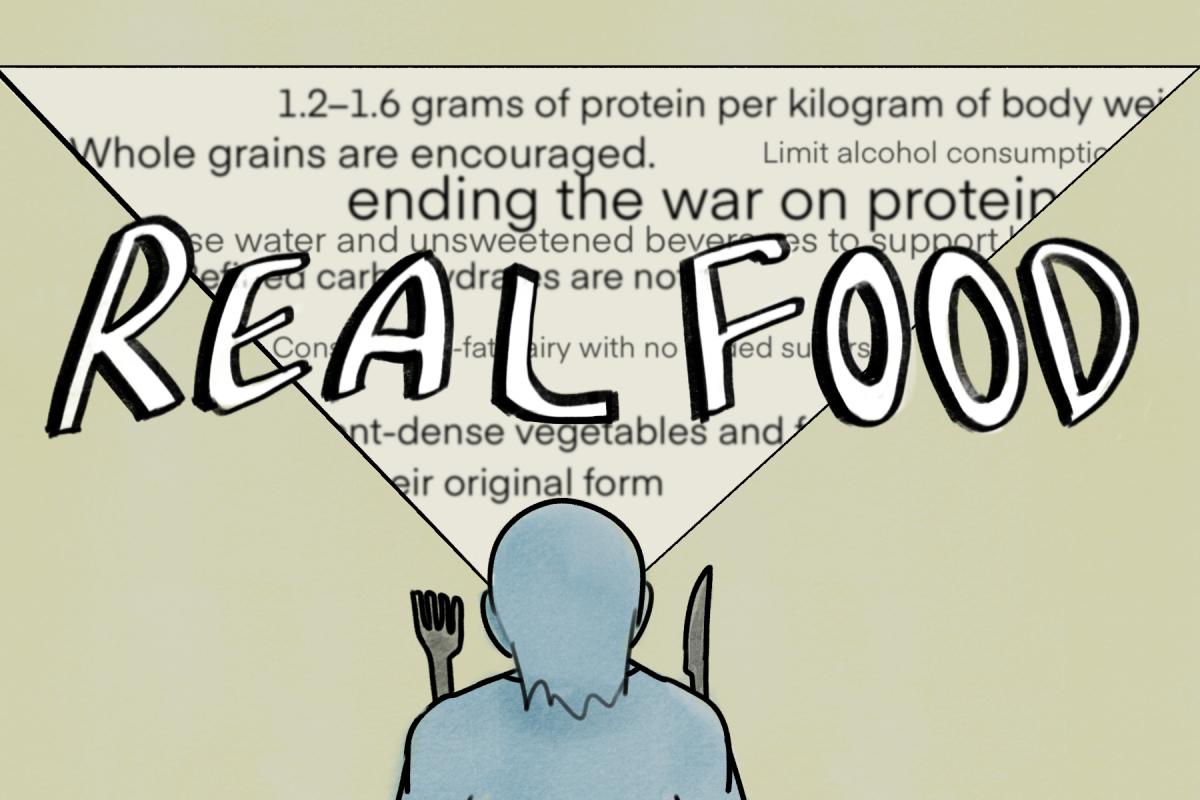
American health policies reflect this cultural shift toward prioritizing weight loss and protein above all else. On Jan. 7, RFK Jr. announced a new set of dietary guidelines with a “flipped” food pyramid, emphasizing the importance of protein, red meat, and full-fat dairy, while demoting most grains to the bottom of the graphic. Claiming his new pyramid is “ending the war on protein,” Kennedy has increased the daily recommended protein intake from 0.83 grams per kilogram of body weight to between 1.2 and 1.6 grams per kilogram.
While the pyramid’s stated goal of encouraging real foods over ultra-processed ones is reasonable, the framing of these goals matters. Americans already consume more than enough protein; watch almost any “what I eat in a day” video on TikTok or Instagram, and you’ll see creators aiming for 150 grams of protein or more. Kennedy’s choice to place protein at the top of the graphic just reinforces the already-prevalent message that more protein is better.
The food industry does not need the health secretary’s endorsement to push it to market protein. The same week these new guidelines were announced, major food chains pushed their new “high-protein” items: Dunkin’ announced its “Protein Milk” and Blaze Pizza launched its “Protein-zza.”
Similar trends appear here on campus. Our campus markets stock entire rows of protein-focused snacks — Lenny & Larry’s cookies, Barebells protein bars, protein oatmeal, even protein crackers — while the campus Starbucks promotes high-protein cold brews and matchas.
High protein doesn’t automatically mean healthy. A “high-protein” pizza is still a pizza, and a sweetened coffee with 30 grams of protein is still a high-sugar drink. When protein is the only thing that’s emphasized, fiber and other micronutrients critical to your health fade into the background. In case you needed the reminder: Fiber supports digestion and gut health, while healthy fats and carbohydrates play crucial roles in cardiovascular fitness and disease prevention.
When everyone constantly only hears “eat more protein,” the natural response isn’t to find a balanced meal — it’s to find the highest-protein option available. For college students trying to balance back-to-back lectures, club meetings, socializing, and studying, convenience often trumps nutritional balance. With a limited budget and time to plan and cook meals, grabbing a protein bar or shake between lectures feels like a healthy choice. But it isn’t; all it’s doing is replacing balanced meals with heavily processed products that appear to be in line with questionable health guidance. The new “flipped” pyramid’s emphasis on protein risks pushing people toward the shortcut mentality it was originally designed to warn against.
Flipping the food pyramid may be beneficial for the food industry, but it isn’t improving our health. And it doesn’t meaningfully change the way Americans think about food. Protein already dominates our social media feeds and grocery store aisles. Government health policies emphasizing protein won’t bring back balanced meals; it just reduces healthy eating into eating protein. If we take these “health” recommendations as gospel, nutrition will continue to be just another trend, and all we’ll get is more protein sparkling water.




Camryn • Feb 17, 2026 at 9:53 am
This article was so entertaining and enlightening. I knew that this new food pyramid didn’t make much sense, but I didn’t consider that the old one sucked too. Great article!
Prasad • Feb 17, 2026 at 9:38 am
Very well written. That’s so true, balance is the key and is lost with each new fad