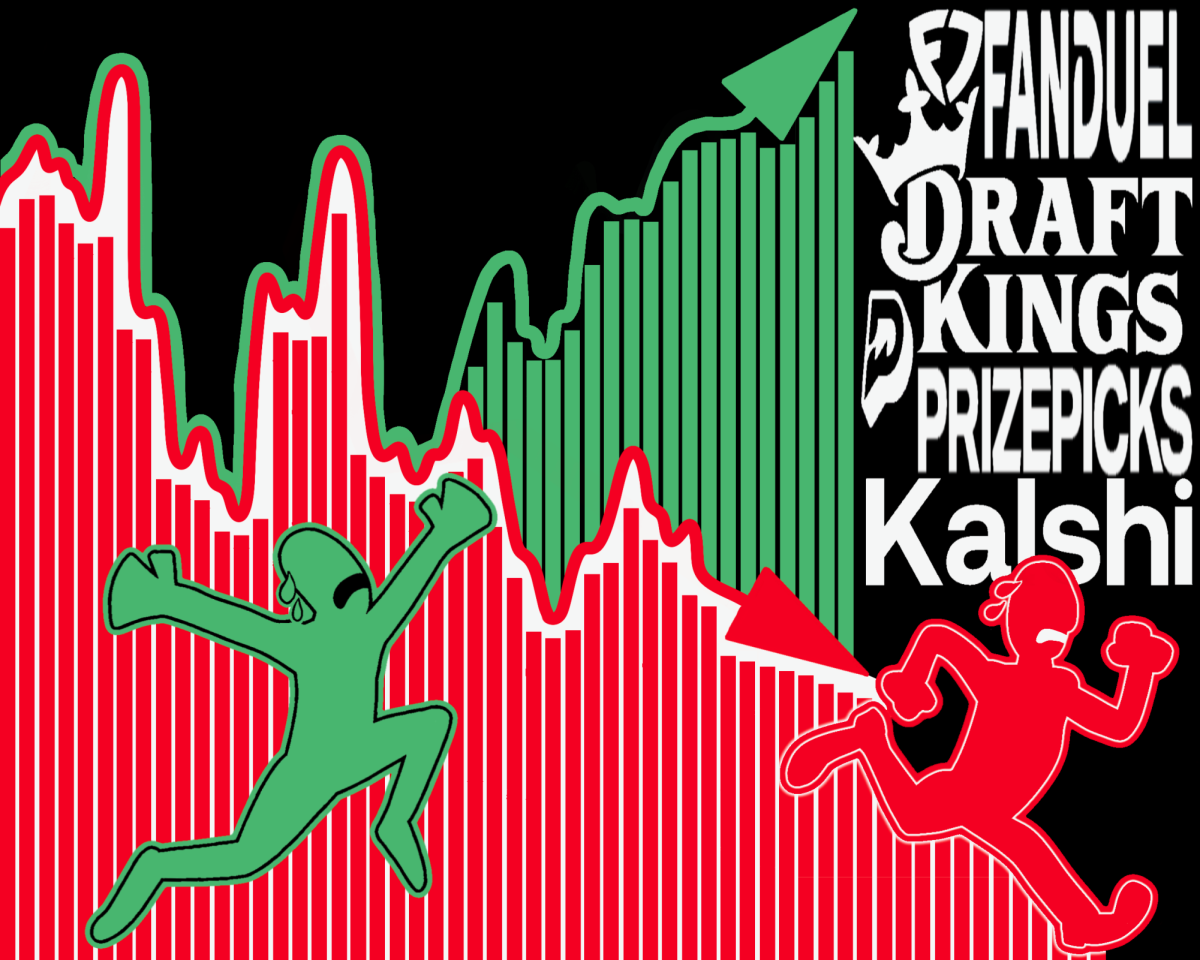
In recent years, sports gambling and prediction markets have exploded in mainstream culture. Betting ads saturate broadcasts of NFL games, podcasts, YouTube videos, and social media feeds. What was once largely confined to sportsbooks in casinos or illegal back-room bookmaking is now available at the tap of a screen.
In this era of online betting, Americans can wager on elections, economic indicators, sporting events, and even cultural trends without leaving their couch. But this rapid expansion has outpaced meaningful oversight: Governments must take action — and quick — to impose far stricter regulation to protect consumers from exploitation, addiction, and financial harm.
Unlike traditional in-person sportsbooks, online betting apps make it remarkably easy to move money from a bank account to a betting platform. A few taps, Face ID confirmation, and a saved card is all it takes to deposit funds. This instantaneous money drain eliminates many of the psychological barriers that once discouraged casual gambling. Walking into a casino or handing cash to a bookmaker required intention, time, and often a sense of risk or shame. Betting apps remove that friction entirely.
That shift fundamentally changes how people gamble. Users can treat betting as a low-stakes play rather than a series of financial decisions with real-world consequences when money is just abstract numbers on your screen. These consequences — impulsive wagers and the tendency to continue betting in the hopes of breaking even — can and will build up quickly, especially for the younger demographics these apps target.
The business model of betting apps preys most heavily on young people. These new apps are specifically designed to nudge young people toward riskier decision-making; among those who gamble, 18- to 24-year-olds are the most likely to engage in high-risk behavior. Unlike older gamblers, they are far more likely to place bets exclusively online where the friction is the lowest. This is precisely why lawmakers should immediately implement safeguards on these platforms.
The house always wins, and online betting apps are the same. Online, this comes in the form of parlays — multiple bets bundled into a single wager — that are far more likely to fail, making them significantly more lucrative for betting companies and much worse for consumers in the long run.
Surveys of sports bettors paint a stark picture of the financial harm caused by easily accessible betting apps. Roughly one-quarter of sports bettors say they were unable to pay a bill because of their wagers, and nearly a third reported that their debts have largely been a result of gambling. Even more alarming, roughly 12% have taken out high-interest payday loans to place their bets. Easy-access betting can be a key driver of financial instability for a significant share of users, and those users are these apps’ best source of income.
If these apps are going to be as pervasive as they are, they need meaningful guardrails. These restrictions should include clear limits on how much an individual can bet per day, per week, and per event to prevent users from gambling away large sums of money in a short time. Regulators should also restrict what kinds of things can be wagered on, and there should be constraints on the number of parlays an individual can bet annually. And, importantly, betting markets that hinge on trivial or purely random outcomes, such as a pregame coin toss or the color of a coach’s Gatorade shower, should be prohibited.
The concern over betting on ridiculous events has emerged particularly with prediction market apps such as Kalshi. These platforms present themselves as educational and civic tools while functioning exactly like gambling. Although Kalshi markets itself as a place to trade “on the outcome of future events,” its users are still wagering real money on uncertain outcomes, which carries the same psychological and financial risks of sports betting while seeming much more innocent.
To be fair, not everything offered on platforms like Kalshi is problematic in the same way as conventional online betting platforms. Some prediction markets, such as those tied to election results, can serve a useful public purpose. Many analysts and journalists already treat these markets as a supplementary barometer of public sentiment and electoral probability, and they encourage people to pay closer attention to politics and become more electorally literate.
But alongside these more substantive markets, Kalshi also hosts bets on outright ridiculous outcomes. These include what a politician might say during a public address, what song an artist like Bad Bunny will perform first at the Super Bowl halftime show, or even which celebrities will attend the game. These kinds of wagers do nothing to improve public understanding of anything that matters. Instead, they transform everyday life into a constant betting opportunity for gambling addicts.
Allowing wagers on trivial cultural minutiae is especially harmful because it normalizes gambling as a default way to engage with public life. People are encouraged to view every moment as a potential profit opportunity, despite losing money in the long run. The constant gamification of life makes it harder for vulnerable people to step away from betting. When nearly anything can be turned into a bet, the entire public sphere becomes a casino.
Now that gambling is woven into our phones, it can no longer be treated as a private vice or a niche pastime. This new reality demands meaningful oversight rather than a hands-off approach that leaves consumers to fend for themselves. The goal shouldn’t be to completely end gambling because that would be impossible. We should aim to ensure this industry exists under rules that protect the public from exploitation.