

Rating: ★★½
Showrunner: Dario Scardapane
Starring Charlie Cox, Vincent D’Onofrio, Deborah Ann Woll, Wilson Bethel, Krysten Ritter, Margarita Levieva, Arty Froushan, Matthew Lillard, Elden Henson
Rated TV: MA
Air date: March 24 to May 5
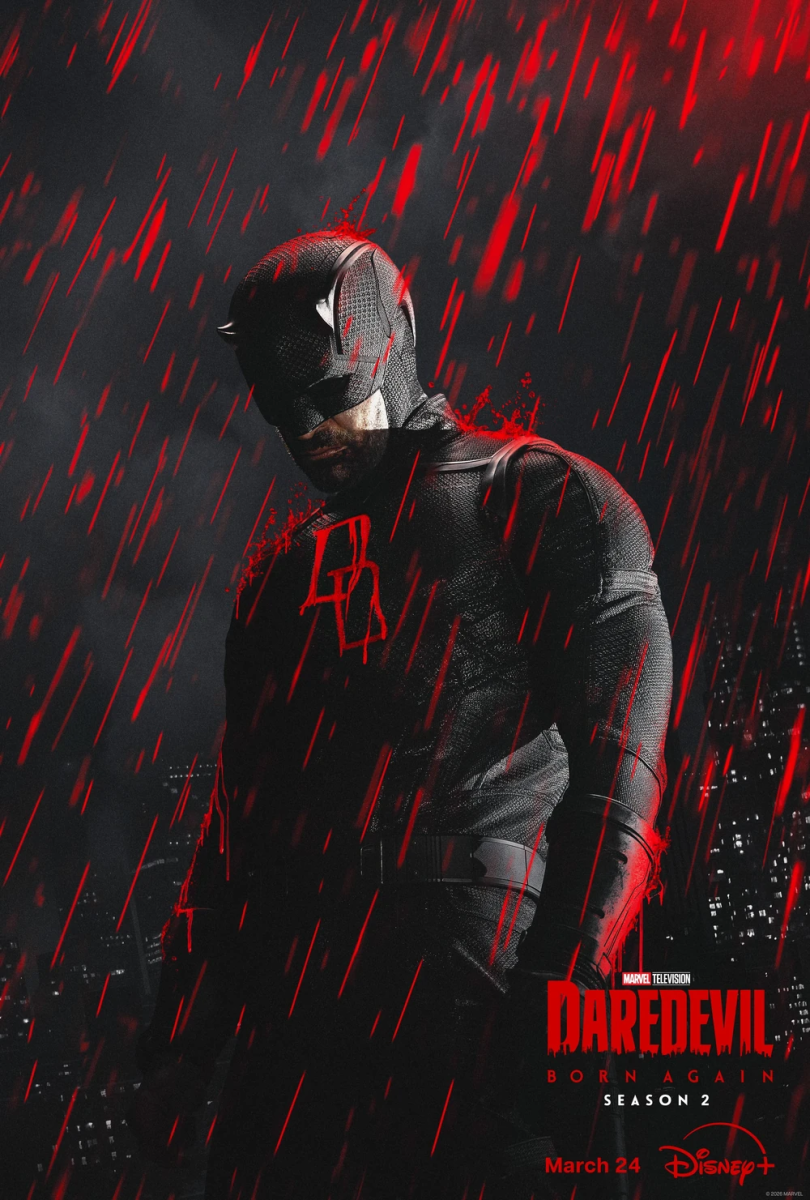
The second season of “Daredevil: Born Again” faced an uphill battle from the moment it was greenlit. Season 1 was subject to a dramatic creative overhaul at the request of leads Charlie Cox and Vincent D’Onofrio. The storyline, tone, and action sequences were all reworked — reused, in some cases — with showrunners and cast alike replaced. The goal: develop an overt canonical link and greater fidelity to the three seasons of Netflix’s “Daredevil.” The result: a tonally confused mess with all the narrative cohesion and technical prowess of half a dozen unrelated limericks, barely kept afloat by the considerable strength of its cast. While this sophomore outing’s greater consistency across the board keeps its head above water, it is again the cast that rights its floundering. Right as they might, though, this season infrequently nears the Netflix-era heights it so clearly aspires to.
After playing the character for 11 years, Cox inhabits Matt Murdock — the blind lawyer known as vigilante Daredevil — with uncanny plausibility. Murdock’s primary objective this season is to dethrone D’Onofrio’s Mayor Wilson Fisk, also known as the Kingpin, for his hulking physique and, perhaps more pertinently, rampant criminality.
Season 2 sees Murdock — publicly MIA after Fisk’s Season 1 raid on his apartment — and longtime confidante Karen Page (Deborah Ann Woll) spearheading a resistance movement against Fisk’s reign, the Anti-Vigilante Task Force. In prescient parallel to reality, the AVTF kidnaps citizens with a little more than impunity and holds them with a little less than due process.
This season makes a concerted effort to hew more closely to established canon, bringing back fan favorites private investigator Jessica Jones (Krysten Ritter, in excellent form) and New York Police Department ally Brett Mahoney (Royce Johnson). The season also increases the screen time of returning characters Page and FBI-agent-turned-marksman Bullseye (a note-perfect Wilson Bethel). Even dead Netflix characters Foggy Nelson (Elden Henson) — whose death was one of the last season’s greatest missteps — and James Wesley (Toby Leonard Moore) return via flashback in the season’s best episode, “The Grand Design.”
As Murdock decides what to do with Bullseye, Nelson’s killer, the episode flashes back a decade in the past, challenging his evolving sense of morality in the present. Even superficial visual choices are well executed in this episode, with welcome attempts to replicate Netflix’s color grade and aspect ratio. While “The Grand Design” is the first time “Born Again” rivals its predecessor, it is also the last, thus far.
The infamous Marvel wig amendments to Cox’s hairline therein are less welcome, as are the utilization of Jones and Mahoney: The former is a glorified cameo — generously, a plot and action accelerator — the latter an unglorified one. This is, unfortunately, demonstrative of the broader realities of “Born Again’s” treatment of that established canon: hollow emulation. The show’s premise is contingent on the world overlooking numerous aspects of the Netflix run, something this show calls back to, though never attempts to properly solve.
This troupe — Cox, Woll, Bethel, and D’Onofrio in particular — could take the dopiest drivel put to paper and come against, through, and out of it all with career-defining performances for any other actor. It’s a good thing the show isn’t, for the most part, quite “dopey drivel.” There are a few scenes where the dialogue is briefly fortune-cookie gibberish — serving as outright nonsense in the wider context of character choice and action but effective musings on morality if not given rational thought. With such overt contradictions, it’s a damn good thing they have a cast of this caliber. It’s a less good thing that the characters they’re reprising are so compromised in depth.
The show bears the responsibility of telling a coherent story, no matter the failings of Season 1. While the series attempts to serve the new characters it introduced, certain story beats come across as manufactured just to get parts in position, making them feel shortchanged. Michael Gandolfini’s Daniel Blake is the prime example; despite likable chemistry with Fisk’s dogsbody-cum-assassin Buck Cashman (Arty Froushan), the character meanders obviously through the narrative, to the performance’s detriment. Some characters, like Clark Johnson’s NYPD detective Cherry — an obvious Mahoney replacement held over from Season 1 — are now entirely superfluous, even liabilities in story.
The show’s primary hobble — Season 1’s dodgy foundation aside — is its writing. The more clearly defined members of the cast, like Bullseye and Page, accordingly fare better, while those victim to moral complexities — namely, Daredevil and Fisk — make crucial decisions hinging on outright mischaracterization. Murdock’s Catholicism, barely touched upon in the first season, plays a marginally bigger role here, even if that margin refers to more scenes shot in nostalgic churches rather than legitimate narrative impact. Broadly speaking, that is the name of the game. Reasonable choices are made on the flimsiest of bases, and not infrequently in the name of spectacle or aesthetics. This, more than anything else, couldn’t be further opposed to the ethos of the original three seasons.
One welcome holdover from the Netflix days is fight choreographer Philip Silvera, who successfully marries Disney’s expanded budget with the gritty sensibilities that informed Netflix’s dust-ups. Daredevil’s billy club — in particular, its detaching into a pair of nunchuckesque batons and wire — gets more play this season than in all his Netflix screentime, ricocheting satisfyingly into fascist headwear and enabling clever acrobatics. Jones’ super strength has also never been more dynamically demonstrated, sending AVTF goons pinwheeling raggedly through windows with convincing bounces; gone are the dastardly digital doubles of Season 1. On Season 2’s part, a faux-oner prison break in Episode 3 marks a stunning high point, deftly swapping perspectives between Murdock and Tony Dalton’s Swordsman, marking our first time seeing the latter’s rakish fighting style. For all its beatings, though, the show never kicks the high bar of ass belonging to Netflix’s seasonal “hallway fights.” These lauded brawls featured Daredevil enacting tremendous violence upon dozens of ne’er-do-wells in poorly lit hallways, ostensibly shot in a single take, increasing in length, violence, and acclaim with each new installment. This failure to shape up is an unfortunate reality shared by most components of the season.
On its own merits, “Born Again” Season 2 reaches adequacy, and, on exceedingly brief occasions, excellence — a vast improvement compared to Season 1. But, desirous of both ownership and consumption of cake, its continued aspiration toward the Netflix-era heights yet simultaneous disinterest in the narrative depth and attention to detail that defined that run sullies the whole experience.
There is no shame in serving cake pops. Just don’t pretend it’s a tiered Red Velvet.


Michely • May 27, 2026 at 6:27 am
For me, an unforgivable mistake was Foggy’s death, the only character who should never have died. As if Matt didn’t need a friend, family, and Karen alone was enough for him. They could have used the plot of his fake death, but Dario and his team simply detest the character, and I believe even the actor. The way he died, totally rushed and senseless, is amateurish writing that made most fans doubt the veracity of the death. The fact that Elden Henson was rehired without knowing the character’s future also demonstrates how much everyone (cast and production) disregards him. The series is a mess, sometimes it even seems cursed and doesn’t deserve the name Daredevil. Matt forgiving and letting Dex go after he killed Foggy and Fisk escaped is also inexplicable and unforgivable. How did Fisk become mayor? We’ll never know.
Why did Dex kill Foggy and not Benny?
Why didn’t Foggy have a funeral?
Who will get Matt’s license now that Foggy is dead? Probably Karen, the character who should have died instead of Foggy.