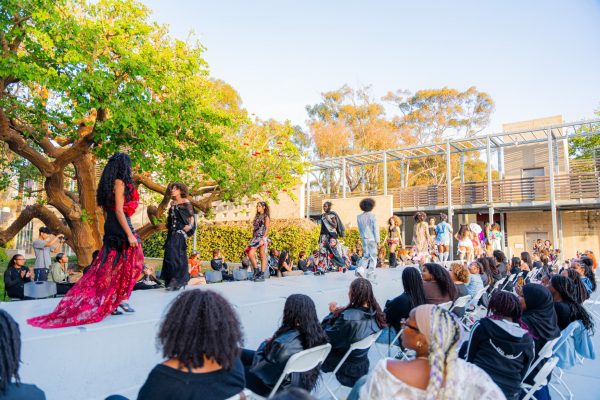
Under the glow of evening sunlight, the UC San Diego Black Resource Center hosted its first-ever Spring Quarter Fashion Show, titled “Crash Out,” at the Old Student Center on May 14. The show’s collections delved into how femininity and masculinity are often seen through a racialized lens.
Throughout the show, each designer’s collection embodied stylistic diversity, subverted expectations, and showcased talent and attention to detail. The BRC centers Black experiences, and this fashion show did just that by exploring how self and racial identity can be portrayed through fashion and design. The looks exemplified deep, intentional thinking about individual and cultural reflection — an unabashed portrayal of racial identity in a society that tries to suppress it — setting the stage for future artistic projects and events.
Trinity Johnson, one of the BRC’s student success educators and “Crash Out’s” key organizer, invited each designer to come onstage to introduce themselves and give a preview of their collections.
AJ Martinez was the first designer to present. She concisely described her collection as “colorful, fun, and flowy,” citing crochet and the summer season as her main inspirations.
Martinez’s looks drew on hand-woven crochet designs, utilizing a vibrant color palette, structured and relaxed silhouettes, and embroidered and textured fabrics. Her use of meticulously crafted materials demonstrated careful design that extended beyond the fabric. Martinez’s styles included a matching crocheted violet and cerulean one-shoulder top and asymmetric skirt set while another featured a cowl-neck halter top and a sheer wrap draped over a brown skirt. By experimenting with different fabrics and shapes, Martinez invited the audience to reflect on how they present themselves both externally and internally. The thin fabric, for example, not only added another layer of texture — contrasting that of the thicker crochet — but also put into question how we intentionally mask our true selves through fashion.
Next, Cecilia Josephine read the audience a letter she wrote addressed to “fellow Black women.” She discussed her feelings of shame surrounding hyperfemininity, including stereotypes about gender and fashion. Critiquing these prejudiced notions, Josephine asked: “Why should I be ashamed?” She also spoke briefly about her own background, including time spent in foster care and mental health struggles, and its impact on her collection. As a final note, Josephine told the audience: “You are not what society portrays you as.”
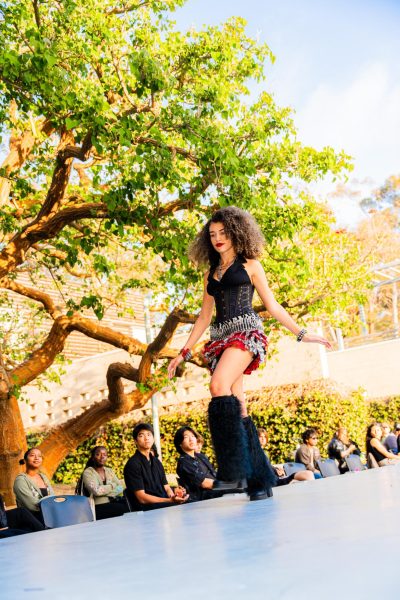
Josephine’s collection featured romantic lace and bow details, various shades of pink, and structured corset silhouettes contrasted with flowing fabric. One look showcased intricately patchworked pants, while another highlighted a long green lace cardigan over a pink corset bustier top. Josephine’s emphasis on feminine styles embodied her preview of the collection, specifically her intention to “go against the grain” of society’s perception of femininity.
Ilisha Kulashera shared about her collection next. In the spirit of the show’s title, she described her designs as dramatic. Kulashera went on to acknowledge that there are “different ways to express emotions,” alluding to her collection’s exploration of complex and nuanced themes.
The first of Kulashera’s looks consisted of a black satin gown embellished with red flowers. Subverting typical runway etiquette, the model threw a bouquet of roses at the end of the catwalk, eliciting a sudden gasp from the audience. From that moment on, Kulashera’s collection told a story of drama and deceit, largely through her choice of music.
In line with these themes, the next look featured the score from the ballet “Swan Lake,” wherein an evil sorcerer turns a princess into a white swan. This look’s sheer white wings emulated the ballet’s central conflict between purity and darkness, while the model’s headpiece, with dangling gold chains covering her mouth, tied back to Kulashera’s focus on emotional expression by evoking an unnerving sense of confinement. Kulashera’s next few looks disrupted the elegance of the first two with edgy rhinestone spikes, velvet cargo pants, fishnets, grommet belts, and chains. Modeled with corsets, frills, and capris, masculine and feminine aspects meshed together, disorienting societal notions about style and gender.
Jaydn was the next designer to take the stage. She credited “punk-themed elements” as the key inspiration for her collection, succinctly describing it as chaotic and fun.
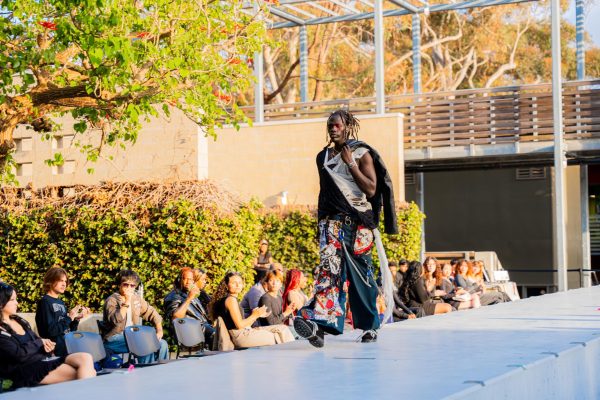
Jaydn’s looks experimented with various color schemes and textured fabrics. From formal designs — a fuchsia velvet blazer, a ruffled white top, and charcoal pants — to casual ones — a crimson top, dark wash jeans, and red and black Jordans — her pieces played around with the binary between streetwear and polished fashion. The last of Jaydn’s looks — a leather jacket, white shirt, black tie, and a plaid train — married soft textures and structured silhouettes in a dynamic stylistic choice that drew the audience’s attention to how proportions affect one’s look. Without the plaid train, for example, the styling would appear more serious, whereas the flowing fabric created a more casual, easygoing vibe.
Sierra Stanly and Julienne, the fifth and final designers, emphasized their exploration of the Black experience, specifically surrounding the impact and nuance of gang violence, in their nontraditional collection — a skit. Before exiting the stage, Stanly reminded the audience to “always be true to yourself.”
The skit began with two men walking onto the runway, one wearing a blue shirt that read “We All Bleed” while the other wore an identical red shirt with “The Same” written on it. Starting in a contentious tone, the two men pretended to fight. Once each read the other’s shirt — realizing they were one and the same — they hugged, symbolizing a moment of unity. The audience watched the skit in silence, paying close attention to the interactions between the two men, specifically in the wake of several sound effects — notably police sirens. The sirens dually symbolized the impact of increased police brutality against Black people and the strain of heavy police presence on individual relationships. The designers’ combination of design, acting, and reality invited the audience to pause and reflect on the effects of violence on the Black community from both a physical and emotional standpoint.
“Crash Out’s” five unique designers and their respective collections didn’t just demonstrate their dedication to creativity and art, but also pushed audiences to reflect on their own perceptions of fashion and society at large.