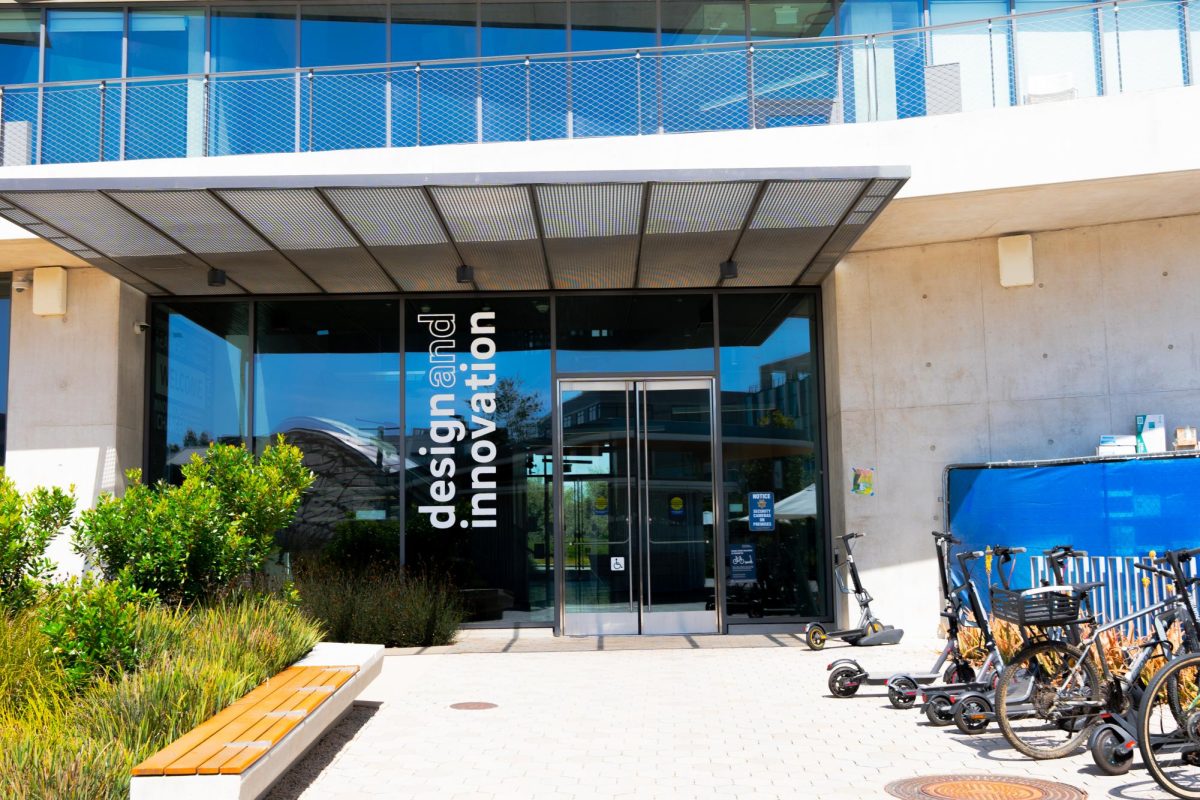
Earlier this month, UC San Diego cut all future funding for the Makerspace, a 10,000-square-foot workshop located on the second floor of the Design and Innovation Building. The University cited recent budget cuts as the cause of the decision.
The Makerspace is managed by the Qualcomm Institute but is funded by the University. Ramesh Rao, Qualcomm’s endowed chair at UCSD, oversees the Makerspace’s funding.
“The Makerspace represents an investment in our students’ future, and I am committed to its continued success,” Rao said to The UCSD Guardian. “Our goal is to further strengthen the Makerspace for the long term — growing community support, securing sustainable funding and ensuring it remains a resource that future Tritons can count on.”
The Makerspace is currently running on leftover funds from fiscal year 2025-26. Rao did not identify an alternative funding source.
“Like a lot of departments, we’ve had to make some adjustments in response to budget uncertainties,” Rao said to The Guardian. He emphasized that “the Makerspace is not closing,” but did not elaborate further.
More than 4,000 students and community members have used the Makerspace since it first opened in 2022, joining EnVision Arts and Engineering Maker Studio as one of only two functional workshops on campus. These spaces house equipment such as sewing machines, 3D printers, laser cutters, and woodworking tools to support student creation. The Makerspace is open to all of UCSD, whereas EnVision access is limited to certain departments.
Associated Students said it will work to either restore UCSD funding for the space or find external sponsors alongside Makerspace representatives. At the last A.S. Senate meeting of Winter Quarter, many students expressed the Makerspace’s value to the student body.
Third-year Julien Yamamoto Chen spoke about Makerspace’s importance as one of the only places on campus for “building personal projects, classes, and competition-ready products and submissions.”
Chen also emphasized the diversity of the Makerspace community.
“There’s a lot of business and tech-related people, but also a lot of creative people who use it as well,” he said. “What makes the Makerspace so special is that it’s open to all students; it’s not restricted, and most of its resources are free. That allows it to create and foster such a powerful builders community that’s unique and not seen anywhere else on campus.”
The Makerspace is not affiliated with any UCSD academic board or department. Two employees, Director David Lesser and “doer of things” Mark Liu, oversee the Makerspace’s entire operation.
Lesser said the Makerspace not only “connects different forms of education and helps creativity,” but also fosters collaboration. “Being open to all means you can learn and be inspired from other people, different backgrounds, projects,” Lesser said. “And ultimately, everyone is teaching and drawing inspiration from everyone else.”