The last great American dynasty — quiet luxury, lighthearted joy, and simple love — is, at long last, revived by reminders of what was most beautiful in our past. At a time when the world feels more grotesquely disconnected than ever before, this generation is lost and lonely. It knows only how to hide behind the facades of screens, lacking media restraint and face-to-face experiences. Thanks to America’s “royal couple,” we are finally reuniting with an innate desire for authentic human beauty and connection — without all the dying noise of digital machines.
Despite the criticism that naturally surrounds any Ryan Murphy-led production, FX’s newest anthology series, “Love Story: John F. Kennedy Jr. & Carolyn Bessette,” has garnered high viewership and ratings since its February Hulu release. Each season plans to focus on one influential couple in American history; the first season brought the romance of Carolyn Bessette and John F. Kennedy Jr. to the small screen.
The much-publicized relationship between Bessette, a former publicist for Calvin Klein, and Kennedy, the son of slain president JFK, cultivated an era of American romance defined by a simple love for the authenticity of each person. What stuck out about their relationship is that they loved in spite of the world; their love had nothing to do with how they were perceived by others, which aggrandized their mythological beauty even more. The end of their relationship — and their lives — in the ‘90s simultaneously marked the end of the analog era of romance.
“Love Story’s” take on the couple has fascinated younger Gen Z viewers, who obsess over the couple’s slow-burn, publicly inaccessible romance. This makes sense — we are presently accustomed to a digital algorithmic system that values constancy and speed over restraint and subtlety. CBK and JFK Jr.’s relationship represents a mystery of love that we’ve been missing since the turn of the 21st century and the rise of the internet.
While the depiction of the events in “Love Story” are dramatized for entertainment’s sake, the show expresses the truth of their relationship quite gracefully. John (Paul Anthony Kelly) met Carolyn (Sarah Pidgeon) at a fundraiser helmed by Calvin Klein (Alessandro Nivola). The deep red lights that reflect off the walls and attendees’ faces foreshadow the intense flame between the fashion icon and her American prince. When they make eye contact, sparks immediately follow. A strategic banter commences, driven by a mutual curiosity and unfettered chemistry. Carolyn plays it sly, while John is intrigued by her mystique. She leaves without giving him her number, only telling him that he can try the reception desk at the CK headquarters.
This is where things get tricky for young bachelors today: John faces the challenge of seeking out Carolyn without the ease of searching her up on social media. In today’s world, Carolyn’s mystery would be mistaken for disinterest, her quiet confidence for a closed door; any potential suitors, in their attempts to be nonchalant, might forget her or choose to give up after further thought. However, we have lost sight of the truth that any worthwhile love cannot grow without risk or certainty. It must be fought for and worked toward, despite the odds.
John, a man true to his time, takes the risk. He chases after Carolyn and wins her over. Pursuit requires courage and extraneous work, which means stepping out of one’s comfort zone — yes, off those phones — and conversing in person. And, ultimately, this makes any relationship all the more timeless, authentic, and gratifying.
These late icons are emblems of such high-risk, high-reward cat-and-mouse play that courtship used to be. “Love Story” puts on full display the grand devotion and passion that the couple ended up winning from each other, which the slowness of the buildup made even more emotionally impactful. Where American youth today lack this inclination for romantic pursuit, they more than make up for it with incel culture and social media stalking. Carolyn and John first struck each other’s fancy in a way that may seem “strange” or, dare I say, “stalker-ish” to younger folks today — but it is actually more legitimate than the way by which internet stalkers and incels act upon their desires.
Later on, under the scrutiny of the media, Carolyn and John tried to keep their relationship out of the public eye. The couple fought in public only once, and still, they struggled to hold themselves up under the weight of the onlooking world. We can see parallels to their strife among Gen Z today. The pressure to publicize and monetize everything that has ever been yours looms even larger now, forcing the individual to sacrifice an authenticity that can be preserved only in private.
Carolyn faced the wrath of a misogynistic press hell-bent on vilifying her every move. Though smaller in scope, young women today similarly and uniquely face the additional stress to become publicly accessible. Paralleling Carolyn’s experiences, Gen Z women are expected to present themselves with a loudness that is often incongruent with the person herself in order to garner likes and comments on social media. But as Carolyn once said, she never felt comfortable in “anything ornate.” In other words, she never felt the pressure to put on a show for those who did not know or want to know her. CBK offers a newfound inspiration for Gen Z women who are learning to conduct a life lived in love and allegiance to themselves — two things that should have never been made to exist exclusively.
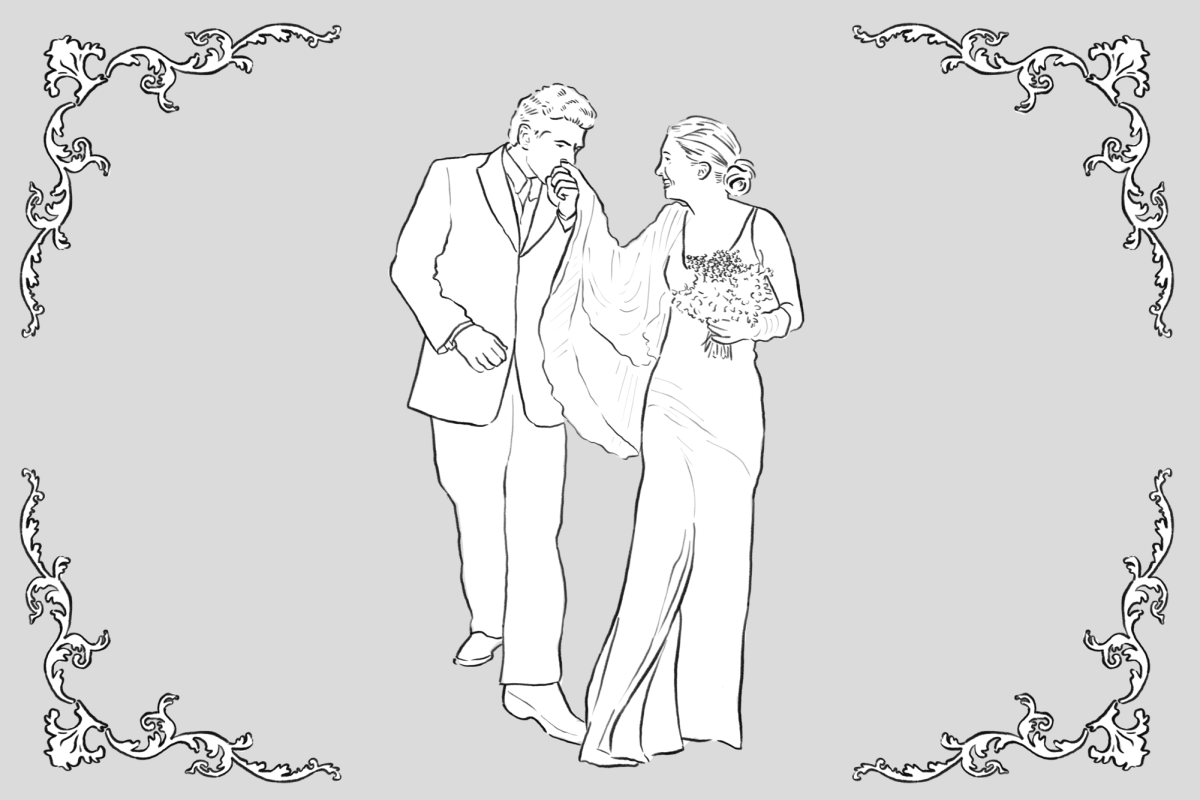
The couple’s secluded wedding on Georgia’s Cumberland Island is reimagined for present-day viewers in Episode 6. John’s black suit and Carolyn’s simple dress cut through the scene — a testament to their timeless black-and-white mystique, both within paparazzi photos and Carolyn’s intentionally understated wardrobe. The most memorable images of the season are the close-ups of John and Carolyn’s faces during the wedding scene as they glance upon each other in delicate lighting — the bride’s face still concealed and beautifully mystified under her veil. Three episodes later, the show depicts their untimely deaths and discloses, with brutal honesty, how increasingly difficult it became to conduct their lives.
A private, unapologetic, and bona fide love like that of Carolyn and John might be foreign to the onlooking pearl-clutchers of today. “Love Story” helped to convey the importance of ditching public opinion and learning to simply love each other, one on one. Amid a dark landscape, Carolyn and John carried an eternal flame that burned quietly yet authentically; it can best be remembered as a flickering beauty of movement kept outside of photographed stillness. “Love Story” passes such a torch on for Gen Z to rediscover within and among themselves.