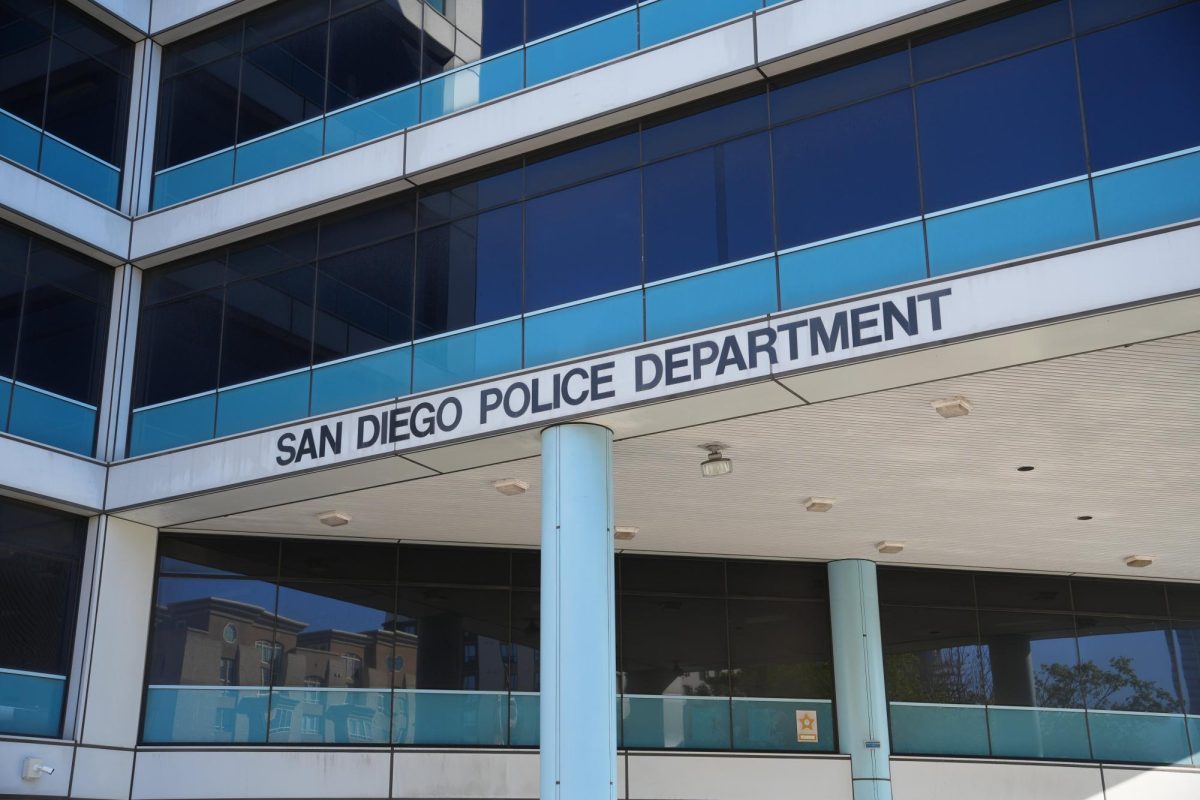
The San Diego Police Department discontinued its Media Identification Card Program on Feb. 13. The program allowed journalists and media personnel to apply for SDPD-issued identification cards called media identification cards. No alternative government-issued credential system has been introduced thus far.
Journalists previously could use their media identification card to identify themselves when reporting at news sites where police are present, such as emergencies and protests. The program also issued journalists vehicle identification placards, which permitted media personnel to park in yellow zones, white zones, green zones, time zones, and zones with parking meters for free and for extended periods of time.
Police Chief Scott Wahl addressed the decision in a memorandum on the same day.
“This decision follows a review of current practices, state and federal law, and the evolving landscape of modern journalism,” the statement read. “While SDPD will no longer issue media identification cards, the Department will continue to uphold the rights of all lawful news gatherers as permitted under California Penal Code 409.5 & 409.6 and other applicable laws.”
The department now encourages media members to carry a “business ID card from their news agency or organization or a business card that may help verify their news affiliation” to assist officers on site. News media must “abide by all legal laws and park safely while reporting throughout the region,” according to the statement.
The San Diego Press Club responded to the program’s termination in a statement also released on Feb. 13, writing that the discontinuation of press passes “will hamper legitimate working members of the media.”
East County Magazine, which covers news in inland San Diego, said the change creates “less access, more friction, and a new discretionary landscape in which on-scene decision-making can tilt against the press, especially when coverage is critical.”
Journalists with MICs and VIPs could “drive through police and/or fire lines (not into crime scenes) provided that public safety and order will not be jeopardized and that investigations by police or fire departments will not be hampered,” according to SDPD Procedure 1.31. These automatic MIC-related privileges no longer exist under new SDPD policy.
Prior to the termination, journalists seeking MICs submitted applications for identification cards and accompanying parking placards through SDPD’s Media Services Unit. Approved credentials remained valid for two years.
All applications currently pending SDPD’s approval will not be processed. Current cardholders do not need to return their passes to the department, but the passes will be considered null and void past their expiration dates. Some reports indicate that current passes may still be honored until the printed expiration date, though the official termination notice does not explicitly confirm this.
The San Diego Pro Chapter of the Society of Professional Journalists gave comment in a Feb. 16 statement.
“We know that news has been distressing to many reporters and photographers who relied on the pass to ensure they are able to access disaster areas and other locations to deliver critical news to the citizens of San Diego,” the statement read. “But we want to be extremely clear: Nothing about this decision changes journalists’ legal right to access news events.”
Journalists retain media access protections under California Penal Code 409.5 and 409.6, which allow law enforcement to limit public access to areas of disasters and emergencies. In such situations, journalists — “duly authorized [representatives] of any news service, newspaper, or radio or television station or network” — are not considered members of the public and can access the area, provided they do not interfere with emergency operations. The statute does not define specific credentials, meaning they do not have to be issued by a government agency.
SDPD will be providing officers with information “on laws governing media access to disaster areas, First Amendment activities, and how to identify media,” its website reads. SDPD has not announced a timeline for this training.