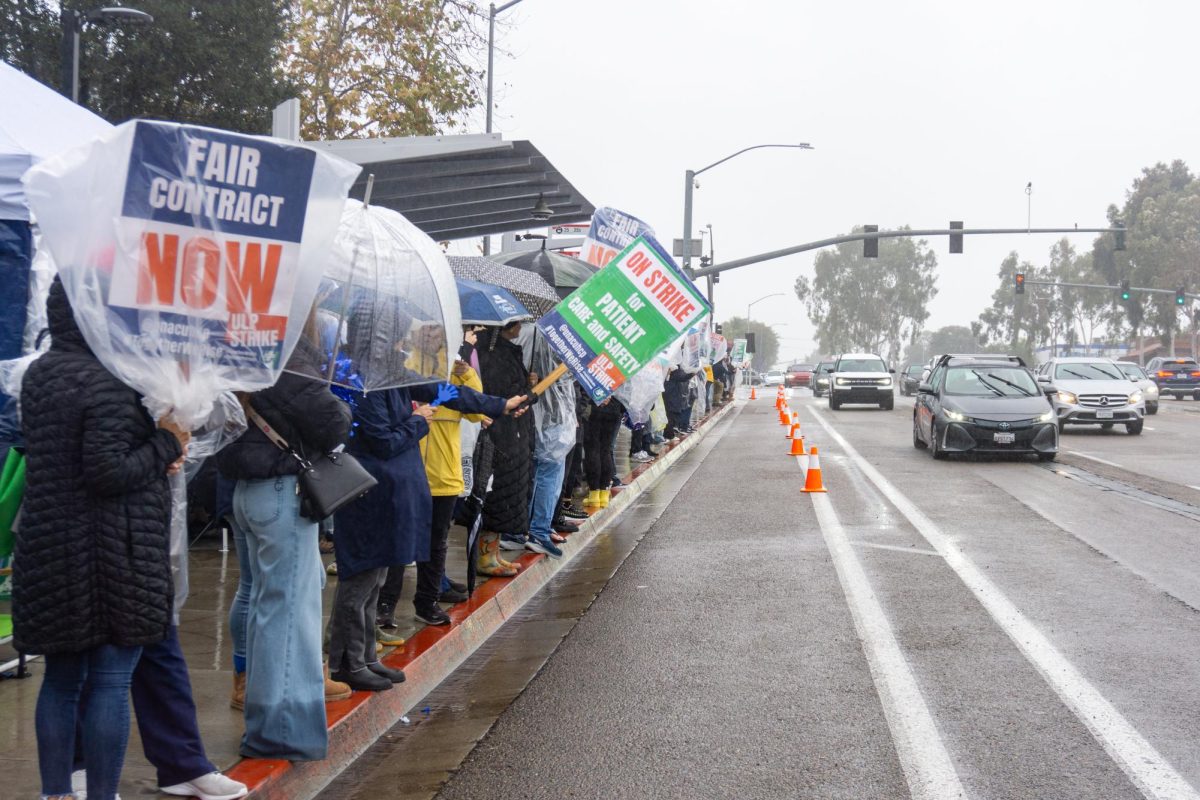
More than 3,000 members of the United Food and Commercial Workers International Union across California held a three-day unfair labor practice strike from Feb. 9 to Feb. 12. At the Kaiser Permanente San Diego Medical Center, over 300 union members rallied to demand more fair employment contracts.
UFCW 770 joined the existing strike against Kaiser Permanente led by United Nurses Associations of California/Union of Health Care Professionals. The UNAC/UHCP began its strike on Jan. 26.
UFCW members represent over 4,000 Kaiser Permanente healthcare employees throughout Los Angeles, Orange, San Diego, San Bernardino, Riverside, Ventura, and Kern counties. These include pharmacy assistants, pharmacy technicians, clinical lab scientists, medical lab technicians, and clinical and administrative health care workers.
UNAC/UHCP represents over 31,000 health care professionals and nurses across California and Hawaii. UNAC/UHCP has a branch in San Diego named the Kaiser San Diego Health Care Professionals Association.
The contract between UFCW pharmacy employees and Kaiser Permanente expired on Nov. 1, 2025. The contract covering UFCW clinical lab scientists and medical laboratory technicians expired on Feb. 1.
Donnie Cobbler, a physician assistant who is part of UNAC/UHCP, shared details on the strike with The UCSD Guardian.
Kaiser Permanente has not approached the bargaining table since Dec. 15, according to Cobbler.
The union has cited short-staffing as a concern since the end of the COVID-19 pandemic. Cobbler expressed that UNAC/UHCP seeks better staffing, in particular.
In December, UFCW Local 770 and other unions under the Alliance of Healthcare Unions filed unfair labor practice charges against Kaiser with the National Labor Relations Board. The suit alleged that Kaiser refused to bargain lawfully and interfered with good-faith negotiations ongoing since April 2025.
Angelica Muro, a Kaiser Permanente pharmacy technician in Los Angeles, expressed frustration with the state of bargaining in a press release from UFCW Local 770 announcing it was joining the strike.
“When workers are punished for speaking up about safety and workload, patients pay the price through longer waits and delayed prescriptions,” Muro said. “Kaiser’s actions don’t just violate labor law, they violate the trust our patients place in us every day.”
Kaiser Permanente discouraged union members from striking and encouraged them to return to the bargaining table in a Jan. 25 statement.
“Our focus remains on reaching agreements that recognize the vital contributions of our employees while ensuring high-quality, affordable care,” the statement read. “We have proposed 21.5% wage increases — our strongest national bargaining offer ever — and we are prepared to close agreements at local tables now. Employees deserve their raises, and patients deserve our full attention, not prolonged disputes.”