Rating: ★★★★★
Artist: Rosalía
Genre: Classical avant-pop
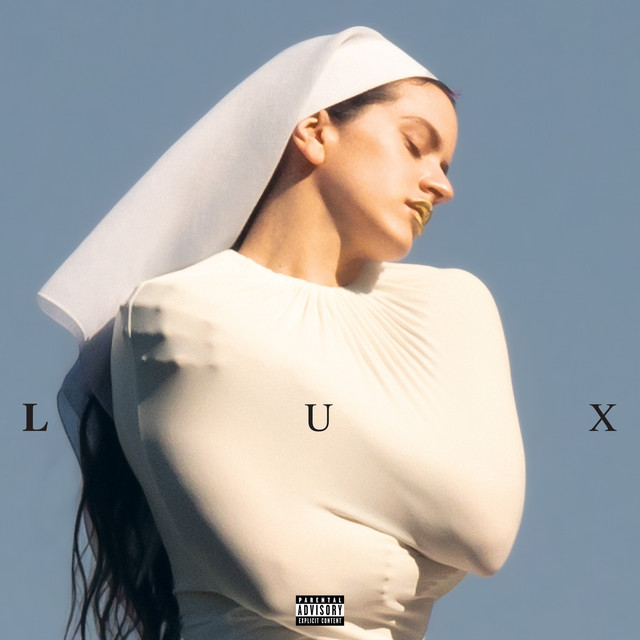
Every so often, an artist emerges who is committed not to virality, but to the pursuit of genuine creation — someone intent on breaking boundaries rather than chasing algorithms. In a societal landscape as charged as today’s, such sentiments feel almost fragile to explore — especially in an era when instantly gratifying music often negates the possibility of true creative liberation. I believe Spanish singer Rosalía’s new album “Lux” is a product of this very creative freedom, crafted not to pander to trends, but to fully realize her artistic vision.
“Lux” offers a journey through love and romance, all grounded in a sense of spirituality that never becomes overtly religious. Rosalía creates space for listeners caught in the liminal tension between the sacred and the corporeal, allowing listeners to feel and immerse themselves completely in the album’s full emotional weight.
What I’d classify as a coruscating, orchestral-pop opus, “Lux” guides listeners through four movements that weave together language, culture, and sound into a single euphonious tapestry. Throughout the album, Rosalía invokes the imagery of female sainthood — both embracing and subverting it — as she reshapes the idea of sanctity into something deeply personal and feminine. Threads of spirituality, femininity, and transformation intertwine with tensions between divine and desire.
From the first notes of opening track “Sexo, Violencia y Llantas,” the album sets its tone as a collision between the visceral and the spiritual. This song blends somber strings with Rosalía’s powerhouse vocals, a parallel to the earthly and the divine.
“Reliquia” begins to delve into Rosalía’s personal mythology, channeling her emotional vulnerability and devotion. Lyrics like, “Pero mi corazón nunca ha sido mío / Yo siempre lo doy” articulate the act of handing over a piece of the self, as if she were offering her own memories and pain as a relic for others’ keeping.
Then comes “Divinize,” sung in Catalan and English, where shimmering strings are elevated by magnetic beats. “Porcelana,” featuring Dougie F, follows, shifting the emotional texture once again. Here, tension, fragility, and transformation begin to mingle. The instruments grow darker, and the voices become more distorted, culminating in a space where vulnerability and power can finally coexist. This track exemplifies one of the album’s central motifs: that the often over-simplified femininity, spirituality, and desire are so much more raw and complex than they may appear.
Introducing a change of pace, “Berghain,” the album’s lead single featuring Björk and Yves Tumor, embraces a more orchestral avant-pop and experimental sensibility. Of the many interpretations posited by fans, the one that has resonated most with me is the idea that only a divine force can bring salvation from longing for acceptance — especially when it always seems out of reach. Songs like “La Perla,” featuring Yahritza y Su Esencia, and “De Madrugá” drag the listeners back down to the intimacy of the mundane, reminding us that the personal and cosmic are always in dialogue.
The most impactful moments of “Lux” come toward the end. In “La Yugular,” Rosalía channels the mystic legacy of the Muslim saint Rabia Basri to present love not just as an emotion but as an all-consuming, life-sustaining force — something even more vital than the jugular vein. And in the final song of the album, “Magnolias,” Rosalía imagines her own death with startling serenity, transforming the end into a ritual of rebirth by repeating the chorus, “Tírame magnolias,” calling for magnolias to be thrown on her.
In the end, what makes “Lux” resonate is not just its ambition, but also its willingness to let its many contradictions remain unresolved. Rather than boiling down these complex emotions for easy consumption, Rosalía builds a world where beauty, pain, desire, and transcendence intersect, thus mirroring the delicate tensions — cultural, societal, and political — that we are surrounded by and immersed in. And in doing so, Rosalía reminds listeners that true creative liberation doesn’t come from clarity or perfection. Rather, embracing the complexity of it all allows art to be truly expansive, unruly, and deeply human.