Skip to Main Content
UC San Diego's independent student newspaper since 1967

The UCSD Guardian

UC San Diego's independent student newspaper since 1967

The UCSD Guardian

UC San Diego's independent student newspaper since 1967

The UCSD Guardian

Electro-Pop Trio Borrows Disco Beats, Recycles Past Tricks

Feb 3, 2011

By Tanner Cook

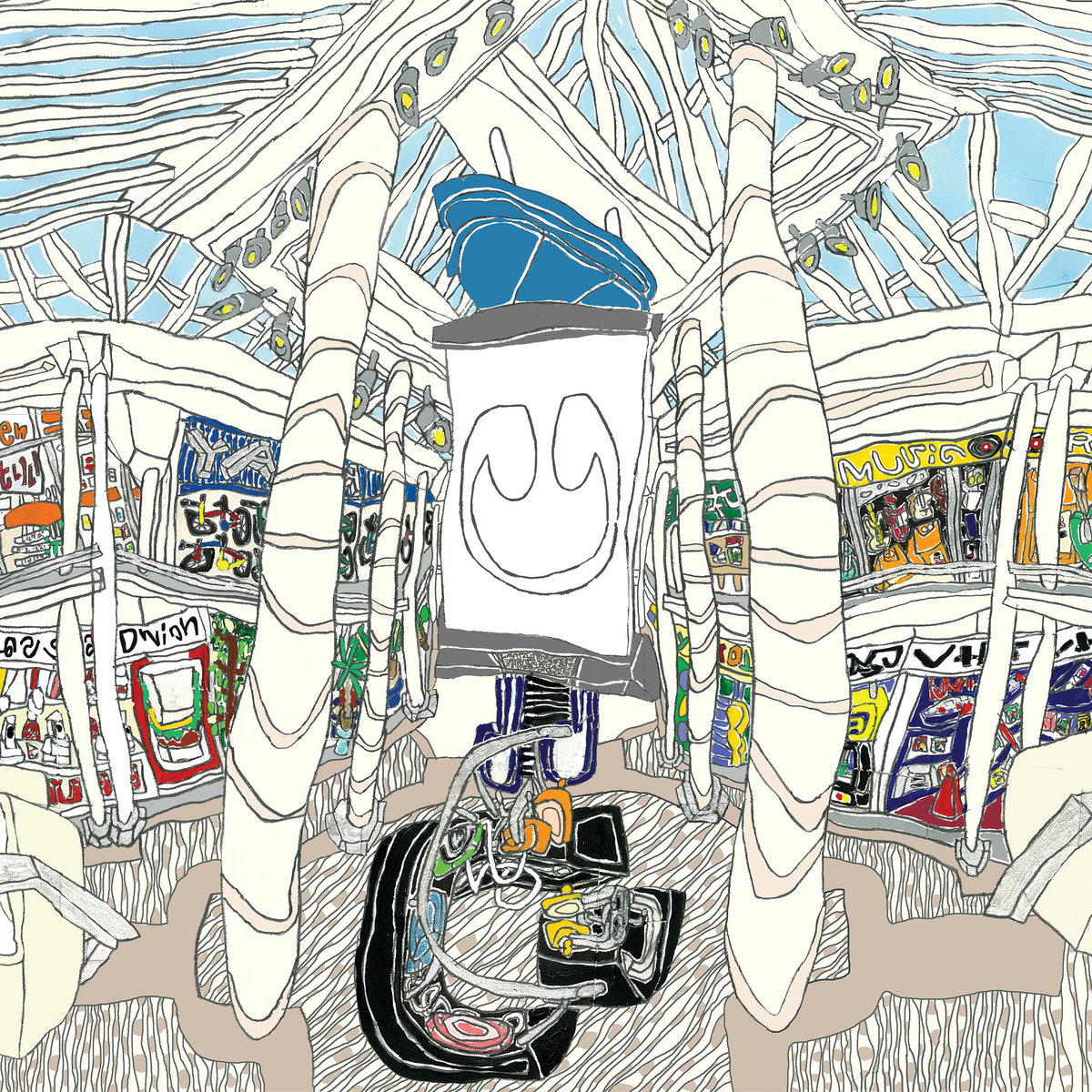
MEN
Talk About Body
IAMSOUND

The best of electro riot grrrl band Le Tigre perfectly paired feminist lyrics with raw and fiery synth punk, turning weighty issues into songs that were always catchy as hell.

Fortunately, side project MEN, fronted by Le Tigre member JD Samson, is not much different. With the help of Michael O’Neill (Princess, Ladybug Transistor) and Ginger Brooks Takahashi (LTTR, The Ballet), MEN’s debut, Talk About Body, blends Le Tigre’s radical roots with refined electronic beats and bass-lines straight from the disco sounds of Indeep’s “Last Night a DJ Saved My Life.”

“Life’s Half Price” starts the party right, as repetitive drums culminate in sweeping guitar and a dance-floor breakdown. Samson’s drawl is more monotone than the screech of Le Tigre front-woman Kathleen Hanna, but by the end of the track she gives imitation a shot: “I’m not your baby’s daddy / Free love / I’m not your baby’s daddy / free money!”

Samson’s roots are particularly evident on tracks like “Credit Card Babie$,” where she offers advice on gay parenting that mostly amounts to suggesting adoption and borrowing someone else’s cock. Like Le Tigre with its feminist focus, MEN makes it a point to show the struggles gays have with adoption and the assumptions the heterosexual majority has on the subject.

But the music itself is not nearly as radical. Scattered with tribal drumming, tuneful guitar riffs and club beats, Talk About Body has Samson trying on everyone else’s style instead of one that is distinctly her own. In tracks like “Simultaneously,” MEN even manage to borrow a couple of notes from the xx’s signature whispery guitar and soft vocals.

It would have served MEN better to craft an original style, rather than taking so heavily from past projects and contemporaries. Talk About Body weaves together raw punk and the synth drum patterns of disco, creating edgy buildups and therapeutic releases made for grooving. But MEN make no impact on the dance floor when they borrow so much from others and invent so little.

Mind-Boggling, Drone-Sampling Electronica Haunts Our Nightmares

Feb 3, 2011

Demdike Stare
Tryptych
Modern Love

There’s no other way to put it: Tryptych, a collection of albums by Manchester duo Demdike Stare, is some seriously freaky shit.

The band, which consists of minimalist techno innovators Miles Whittaker and Sean Canty, spent the last year crafting three LPs worth of electronic music composed of samples from obscure sources: old film soundtracks, fuzzed-out Eastern European field recordings, Middle Eastern folk and 1980s Scandinavian industrial drone.

For the most part, the 33 songs collected on Tryptych‘s three albums — Forest of Evil, Liberation Through Hearing and Voices of Dust — fall into two categories. They’re either atmospheric psychedelic music or repetitive and complex dub techno. Even for listeners that aren’t terribly well-versed in dark ambient music (dubbed “hauntology” by music blogs), it’s obvious that Demdike Stare know their stuff.

On “Forest of Evil (Dusk)” — found on the first album — whispering voices and muddy static are overtaken by a relentless, arpeggiated synthesizer moan that sounds as though it was taken from the soundtrack to a long-forgotten horror film. This approach is pushed to its limit on tracks like the standout “Regolith,” on which Baltic folk guitars are paired with unearthly female wails and a thundering bass drone.

Some of the most intriguing music on Tryptych is found on the album’s more up-tempo tracks. The brooding “Bardo Thodol,” named after the Tibetan Book of the Dead, begins with a sample taken from a dated field recording of a Central Asian folk group and evolves into a danceable techno groove. The similarly-minded “Caged in Stammheim” turns a lurching, reversed bass drum and female vocals into a hazy dub beat.

That’s what makes Tryptych so interesting. The weirdest part of the album isn’t the creepy cult-referencing spoken word samples or the early analog electronic experiments — it’s the fact that the results are oftentimes so accessible.

It’s still hard to get past the freaky, though: The more eccentric moments will scare you shitless. (7/10)

Track Reviews — 2/3/11

Feb 3, 2011

'Helplessness Blues'
Fleet Foxes
Sub Pop

Seattle’s Starbucks-folk collective Fleet Foxes will return this May with their highly anticipated second effort Helplessness Blues. Until then, the album’s first single and title track provide enough plucking guitar, soaring melodies and wispy, Garfunkel-style vocals to satiate our thirst for those bucolic, hippie-bred simpler times.

“Helplessness Blues” packs an impressive cinematic narrative into five minutes. Frontman Robin Pecknold begins with a chorus-backed overture about youth and proving oneself, then picks up steam, erupting in an acoustic-driven chorus that chugs past lyrical images of waiting tables and working in orchards. Pecknold wields this aesthetic with emotive sincerity, following the musings of a twentysomething who feels helpless in a world of dizzying choices and consequences.

Clearly, Fleet Foxes plan to remain faithful to their breezy sta- ple sound. The single’s combination of stripped-down production and pleasant lyrical introspection provide hope for a solid return.

—Neelaab Nasraty

'Words I Never Said'
Lupe Fiasco
Atlantic

Lupe Fiasco is angry at the world, and he’s not shy about it. “Words I Never Said” is five minutes of pure fury — an avalanche of lyrical broadsides aimed at everything from the bumbling media to shitty schools to Obama himself. After Skylar Grey opens the track with a hauntingly beautiful verse sung over echoing keystrokes, Lupe immediately retorts, spitting such gems as, “I really think the war on terror is a bunch of bullshit/ just a poor excuse for you to use up all your bullets.”

Lupe’s venom spares no one and builds off a steady, pulsating beat that works with the chilling chorus to create a sense of doom. It’s a virtuoso performance, more wrathful than past hits like “Superstar” or “Day Dreaming,” but just as packed with effortless wordplay and slick rhymes.

—Imran Manji

Baseball Looks to Build on Record-Setting 2010 Season

Feb 3, 2011

BASEBALL — Six All-Americans. Defensive Player of the Year. Coach of the Year. The accolades rolled in by the dozens for UCSD baseball last year, but one accomplishment was just short of what the team was aiming for.

NCAA Division II Runners-Up.

The Tritons had their most successful year in program history in 2010, winning the CCAA title, NCAA West Regional Title and setting program records in wins, runs and team batting average. The squad set a total of 19 program records in 2010 including individual marks. The Tritons finished the season 54-8 and advanced to the NCAA Division-II title game.

In his 14th year at the helm, UCSD alum Dan O’Brien is by far the program’s most successful coach. O’Brien was awarded his second consecutive Division II Coach of the Year last season, and has led his squad to back-to-back D-II College World Series appearances.

This year, the senior-laden squad has every chance of returning to the heights of last season, and is the early-season contender for the national title. The team was the unanimous coaches’ pick to take the CCAA title again, and ranked No. 2 nationally in the Division-II preseason coaches’ poll. Southern Indiana, who defeated the Tritons 6-4 in the 2010 Title Game, begins the season with the top ranking.

The Tritons return with many of the top players from last year’s squad, and look poised to make another run to the College World Series in Cary, N.C. Ace Tim Shibuya returns, and will look to continue his dominating form from last year. The senior produced a school record of 13 wins with a 13-3 overall record, struck out 77 batters in 124 innings and threw five complete games. Fellow senior right-hander Guido Knudson also returns, after going 10-3 with a 3.87 ERA and four complete games last year.

In the field, the Tritons return six starters, with third baseman Evan Kehoe leading the way. The senior hit .351 last season, with eight home runs and 63 RBIs. Left fielder Aaron Bauman also returns after leading the team with a .553 OBP last season, while hitting .413 with eight home runs. Fellow returning starters Kyle Saul, Aaron Bauman, Kellen Lee, Danny Susdorf, Michael Benton and Grant Bauer provide a fearsome lineup for any opposing pitching staff.

But the Tritons have some significant holes to fill. All-Americans Vance Albitz and Brendan Gregorich have departed, along with starting pitchers Matt Rossman and Kirby St. John. Gregorich set a school record by hitting a ridiculous .452 last season, and Albitz won consecutive Defensive Player of the Year awards from his shortstop position.

“As far as position players, yeah we lost two or three guys but we have six guys coming back,” Kehoe said. “It’s good to see younger guys fit in. You can look at it two ways: You can say they have some holes to fill, or you can say they have six guys returning and they’re just going to be even better.”

Last season, Rossman and St. John combined for a 21-1 record on 199.1 innings pitched, and the Tritons will need to find a way to fill their spots in the rotation. Righty Daniel Simmons and lefty Taylor Austin appear set to step up.

“I think our pitching staff is deeper than it’s ever been,” Kehoe said. “Just watching our staff the first two games, they’ve been amazing. They’ve been dominating the other teams.”

But the Tritons have more than just personnel change this year. Over the offseason, the team and the UCSD Athletics Department embarked on a campaign to have lights installed at Triton ballpark, and — thanks to a slew of donations from alumni — were able to have the lights installed in January, in time for the 2011 season. The lack of lighting disqualified UCSD from hosting playoff games in the past, even when the squad should have hosted based on record and ranking.

The Tritons hosted their first night game on Saturday, Jan. 29 in an exhibition game against Point Loma Nazarene. Over 250 attended the “Light It Up” celebration before the game, with former player Sean Greer flipping the switch to light the field.

“It’s just a huge occasion,” Kehoe said. “It’s kind of a watershed moment for our program. It’s been one of our goals for a few years now. I didn’t really think it would manifest itself until after I was gone. It just shows that our program is headed in the right direction.”

The growth didn’t come without growing pains: The lights were on a timer and shut off promptly at 10 p.m. in the middle of the ninth inning. Facing a 15-minute warm-up time to get the lights back on and playing only an exhibition, the game was called short.

Nevertheless, O’Brien agreed that the lights mean a lot to the program.

“It was an electric night,” O’Brien said. “It was just an incredible night — from the alumni, the place was packed, the music was loud, everyone was having a great time. It was a really special night.”

On the field, the Tritons defeated Point Loma 5-0.

“This was the first time where you could see the team start to realize how good they could be,” O’Brien said. “I think things are starting to fall into place.”

UCSD has won all three of its preseason exhibition games, with 2-1 and 3-2 wins over San Diego Christian College.

The Tritons will open their regular season at home with a four-game series against Western Oregon. The first game is on Friday, Feb. 4 at 6 p.m., followed by a doubleheader on Saturday beginning at noon. The series wraps up on Sunday with an 11 a.m. game.

Readers can contact Liam Rose at [email protected].


SNL Recap: Jesse Eisenberg and Nicki Minaj

Feb 3, 2011

Recap: Saturday Night Live

Season 36, Episode 13

“Jesse Eisenberg, Nicki Minaj”

When I heard that Jesse Eisenberg was going to host “Saturday Night Live,” my first thought was, “can he do comedy?” I immediately thought of all the popular movies he’s been in, and — barring the almighty “Social Network” — most of his characters have been funny. With that being the case, it’s strange that I didn’t automatically associate Eisenberg with comedy. Apparently, “SNL” felt the same, because right from the start, it seemed like they were forcing the connection.

A Golden Voice

Jan 27, 2011

Director David Seidler waited 25 years to pen his dream project, a story about a burgeoning monarch who suffered from a debilitating stutter. Following Tuesday’s Oscar nomination announcements, “The King’s Speech” emerged as an early frontrunner, leading the pack with 12 nods overall, one of which is for Seidler’s critically acclaimed screenplay. After spending most of his time writing kiddie narratives about royalty (“The King and I,” “Quest for Camelot”), Seidler’s hand in a live-action drama was unexpected. But according to the UK native, “The King’s Speech” was conceptualized far before the release of “Quest for Camelot” or “The King and I.”

“When I originally wanted to write it in 1980, I contacted the queen mother because I had discovered a son of Logue’s (Geoffery Rush’s character) and he said he would cooperate and show me all his notebooks from when he was treating the king, but I had to get the queen’s permission,” Seidler said. “When I wrote to her, she said ‘Please Mr. Seidler, not in my lifetime. The memory of those events are still too painful.’”

So the project was benched.

“I had to wait 25 years,” Seidler said. “I didn’t think I would have to wait 25 years, I thought ‘She’s 80 — I’ll wait a couple of years.’ She died at 100 — almost 102.”

It was worth the wait. When “The King’s Speech” finally came together, the 74-year-old was thrilled with all the A-listers signed on to the film.

“Working with them was like dying and going to heaven for a writer, because seldom do you get such a fine cast,” he said. “Colin [Firth] is quite amazing. I think it’s very unfair that someone can be that intelligent, that char- ismatic, that talented, that good-looking and that nice too. He really is truly a quintessential great guy. And Geoffrey is non-stop energy — the two of them worked together beautifully.”

Seidler had always imagined Rush as Lionel, but hadn’t expected Firth to take on Bertie. The screenwriter was pleasantly surprised with how well he fit the role.

“He probed very deeply as to what it felt like to be a stutterer,” Seidler said. (The screenwriter suffered from a stutter from ages three to 16.) “What it actually physically felt like, what the muscles felt like. The bones lock up, that sinking feeling in your stomach. He really wanted to know viscerally what it was all about. And emotionally what it was all about — the sense of isola- tion, the sense of frustration, the sense of not being able to have a voice to make yourself heard. And he absorbed all of this. After days he had that stutter down — it was incredible."

As for Bertie’s wife, Seidler developed admiration for the film’s leading lady, Helena Bonham Carter.

“Helena is . . . I’m totally in love with her,” Seidler said. “I told her to tell Tim Burton [Carter’s husband] to watch his back. She’s wonderfully mischievous.”

Though Seidler made no sacrifices in terms of the cast, the script bled on the cutting room floor. Two aspects of Seidler’s original screen- play were cut from “The King’s Speech” during pre-production, a time when major changes can occur to a film’s script, at the discretion of the director and producers.

“Originally Cosmo Lang and Winston Churchill were almost a comic Greek chorus,” Seidler said. “Some funny lines, I mean really funny lines. And Tom [Hooper, the film’s director] felt, and in retrospect I feel that he was absolutely correct, that it was too theatrical. It was wonderful for a stage play, but for a film, it felt a little mattered and stagey. And he didn’t want any of that, so that all got taken out. Really, some of my best lines — gone, gone, gone.”

The second change was more controversial. Seidler had originally penned King George’s death to mirror how it plays out in the history books.

“The euthanasia of King George V, you realize he was euthanized — they finished him off because they wanted the news to go out to the respectable BBC and London Times,” Seidler said. “They didn’t want the news to be told by the less disciplined afternoon papers. But he wasn’t dying on time, so they euthanized him; they actually euthanized him with an injection of morphine and codeine. I thought that was, first off, very powerful and dramatic. And more important than that, I thought it said something very meaningful about the topic; in other words, it showed the power of the new media and therefore what Bertie was up against.”

Instead, filmmakers agreed to gloss over the messy details.

“Ultimately, Tom and the producers decided — we filmed it — but it didn’t make the final cut,” Seidler said. “They felt it was so controversial that it would start such a controversy, it would overpower discussions of the film itself. And so that was the reason for that.”

Even though “The King’s Speech” is still making its rounds at awards shows, Seidler has already begun work on a new project.
“Next for me is a project called ‘The Lady Who Went too Far,’” Seidler said. “It’s about Lady Hester Stanhope, who in the Napoleonic wars, went off into the Middle East and became a Lawrence of Arabia — sort of a Laura of Arabia. Exactly what Lawrence did, only 100 years before him.“

We can only hope it earns him as much Oscar gold as his current biopic.

‘The Rite’ Goes Wrong

Jan 27, 2011

By Natalie Bui

Despite its array of distorted joints, twisted limbs and devilish screeches, “The Rite” concerns itself more with faith than the typical blood and guts of the genre. “What did you expect? Spinning of the heads?” Father Lucas (Anthony Hopkins) says. (Actually, yes.)

American Michael Kovak (lifeless newcomer Colin O’Donoghue) travels to Italy to study under Father Lucas as a ticket out of his dead-end small town. Kovak and Lucas are sent to help a pregnant, possessed Italian 16-year-old girl that was raped by her father. The two attempt to perform an exorcism — but Kovak doesn’t believe in the devil. He just thinks the chick needs a shrink.

“The Rite” is loosely based on the real-life experiences of Father Thomas, who was brought on set to help portray the exorcism scenes as accurately as possible.

It’s the eternal power play revisited — science vs. faith. And instead of providing a convincing answer worth the almost two hours it takes to watch, director Mikael Hafstrom chooses instead to dwell in art-school cinematography (saturated flash-backs and hallucinations, shots of craftily placed rosary beads).

Michael Petroni’s script does Hafstrom no favors. Trading in frights for personal dilemmas, “The Rite” depends upon a nuanced character study; each priests’ motivations, however, become muddled as the movie progresses. Why Kovak even wants to join the superstitious seminary is a mystery to all involved — including the young man himself.

Despite philosophical missteps, the darker scenes use horror standbys to occasional success. The noises in the background — eerie organs, sort of like what you’d hear after communion — build to a “Jaws”-like crescendo, making the most insubstantial scenes appear menacing (a cat leaping from a window inspires a yelp or two). But “The Rite” has no follow-through, choosing to make nothing from the narrative’s inherent suspense.

Even the demons are duds. The shots of possessed victims inspire laughter, not fear — their bodies twist into decrepit expressions of pain, with clownishly dilated pupils and humorously wrinkled faces.

With a premise that relies on the devil’s shock value, the flick would have been more successful even if it stuck to Hollywood horror archetypes. Instead, “The Rite” tries to impart a dull sermon. Better to take a catnap in the pews. (D)

Post-Punk Icons Attempt A Return to Form But Show Their Old Age

Jan 27, 2011

Gang Of Four
Content
Yep Roc

After 30 years of inspiring genre-defining post-punk from R.E.M. to the Red Hot Chili Peppers, you’d expect Gang of Four’s latest album to reflect some semblance of that effortlessly aggressive New Wave flare. But on Content, the iconic band abandons its guitar-heavy, politically driven sound for baffling, avant-garde minimalism.

Whereas their most successful singles were in the vein of less rage-infused Sex Pistols (“Damaged Goods” off debut Entertainment!), or a rhythmic cacophony of experimental feedback (“Tattoo” from last studio album Shrinkwrapped), Content stretches a handful of repetitive tracks into an album of obvious punk.

On “You’ll Never Pay for the Farm,” singer Jon King drawls, “You’ll never pay for the farm/Someone should raise the alarm/I think you’re losing your charm/You cannot do any harm.” The beaten-to-death rhyme scheme, along with King’s limited vocal range (he strains to reach high notes at his tender age of 55), might make you wonder whether the same track’s been played on repeat for the past half an hour.

The only gleam of hope comes when guitarist Andy Gill is able to escape King’s lifeless drone on the prophetically titled “It Was Never Gonna Turn Out Too Good,” a dark and melodious jam that’s beautiful in its simplicity. He releases a slow, simple riff that hums with rich reverb and glimmering moments of feed-back, but fails to save the track from its curious conclusion: a dialogue between a Stephen Hawking-style synthesizer and King’s vocally impaired subconscious on poverty and the tragedy of his life.

Gang of Four hold a place of relevance and esteem from punk’s finest era, but there’s none of that here. The intensity and originality of the group has drained away in the decades since their inception, as more recent artists have taken their once-inno- vative style and run with it (Pixies, Interpol, Death From Above 1979...), leaving us with an album of poorly recycled sounds. (4/10)

Bourgeois Canadian Befuddles Your Office Easy Listening, Sax Included

Jan 27, 2011

Destroyer
Kaputt
Merge

The New Pornographers are an easy band to like. The Vancouver band’s best album, 2005’s Twin Cinema, is chock-full of catchy melodies, likable power-pop aesthetics and just enough charm to separate it from alt-rock radio fodder. But on each New Pornographers record, there’s always a hint of eccentricity beneath the surface. That glimmer of weirdness is Dan Bejar. When not playing with the New Pornographers, Bejar composes complex, literate pop music under solo moniker Destroyer.

Bejar’s records, such as his 2008 opus Rubies, tend to sound like a drunk professor crooning over groovy, Bowie-style electric rock. While the “drunk professor” part of the equation is still firmly intact, Kaputt finds Bejar collaborating with several Vancouver-area electronic artists to produce music that falls somewhere between dentist’s office soft rock and the ambience of Aphex Twin. The setup sounds sketchy in print, but the results are oddly captivating.

On “Bay of Pigs,” a pre-release single and definite standout, Bejar spends two minutes crafting a gorgeous, minimalist soundscape before the vocals even begin. When he does come in, he does so in classic Destroyer style. “Listen,” he beckons, “I’ve been drinking.” He goes on to declare: “The world is black stones dressed up in the rain.” The song meanders for another eight minutes, with Bejar dropping similarly nebulous observations amid stark disco synthesizers.

Another standout is the dance floor-worthy title track, on which Bejar describes a man “chasing some girls, all right, chasing cocaine into the backrooms of the world” while funk-lite bass and smooth percussion hazily roll through the background.

His lyrics are vague — equally deserving of dismissal or unpacking upon each listen — and his sounds are bizarre, but with Kaputt, Destroyer still keeps you interested, crafting one of the best records of Bejar’s career. (8/10)

Guitar-and-Beard Man Broadens Sound, Loses Us Along the Way

Jan 27, 2011

Iron & Wine
Kiss Each Other Clean
Warner Bros.

On his 2007 record The Shepherd’s Dog, Sam Beam — under moniker Iron & Wine — swapped his pared-down folk sound for a full band, adding brooding percussion and a variety of globe-trotting influences. The result was not only interesting, but also surprisingly radio-friendly (Beam made it on the “Twilight” soundtrack for a reason).

Four years later, even Kristen Stewart would be shocked to hear the pompous style Beam has championed on follow-up album Kiss Each Other Clean.

Beam’s once quiet, whispery vocals have abandoned all restraint, and his acoustic sound is now drowned out by cascading jazz horns. In small doses — as evidenced on The Shepherd’s Dog — it’s an effective experiment. But at such a constant extreme, Beam’s loose assemblage of noises and instruments sounds more puzzled than put-together.

On “Rabbit Will Run,” for example, Neil Young- esque electric guitar riffs are layered on top of peculiar hoots and Caribbean drums. Beam is trying out the musical experiments of ‘70s folk artists like Cat Stevens, to schizophrenic effect.

The effort is admirable and the experiments that do work are a step in the right direction. The psychedelic finale “Your Fake Name Is Good Enough For Me” tries out a Pink Floyd- style sound that could have worked well for the rest of the album. It’s like an old-school jam band breakdown — swirling from horn crescendos to an escalating sing-a-long, before clattering to a climactic end. But when the experiment goes badly — with such an overwhelming assemblage of global instruments and folk standbys — less really might have been more.

When Bob Dylan first plugged in his electric guitar at the Newport Folk Festival in 1963, he took his folk roots and acoustic harmonies to new heights. Maybe Beam wants to do the same here, but the album is more a disorienting scramble than a musical revolution, though a few moments of brilliance slip their way in along the way. (5/10)

Nor Cal Art Rockers Add Polish to Once-Freewheeling Jams

Jan 27, 2011

Deerhoof
Deerhoof Vs. Evil
Polyvinyl

Critics love to praise bands by saying they have “their own sound,” but few have earned the designation to the extent of San Francisco avant-rock powerhouse Deerhoof. The animal drumming of founder Greg Saunier offsets singer Satomi Matsuzaki’s cute-but-deadly vocals, as the band navigates a fusion of psychedelia, ‘70s funk and electronica.

Ten stunning albums in, Deerhoof extend their spectacularly diverse career with Deerhoof Vs. Evil. Absent is the dry, improvisational whimsy of The Runners Four. Deerhoof have opted for a tamer, more deliberate approach, and the product is all-too-often disappointing.

The most obvious departure from the group’s past work is the album’s meticulous production. The alien percussion and synthetic bleeps on opener “Qui Dorm, Nome?s Somia” rise to a focused, mid-tempo jam that regrettably avoids the band’s signature chaos. Even Matsuzaki sounds unfamiliar, her typical squeaky imperfections are drowned out by an overdubbed chorus.

But much of Deerhoof Vs. Evil simply feels tired. “Behold a Marvel in the Darkness” opens with a pleasant, acoustic guitar- driven verse that drags along painfully, interrupted by an occasional surge of noise. The jangling stomp of “Hey I Can” loses its charm half-way into a driving climax of cuckoo clock sounds and monosyllabic chirping.

Occasionally, Evil’s focus on songwriting pays off. Single “Super Duper Rescue Heads!” provides a catchy pop refrain over exuberant percussion and synthesizer. “Secret Mobilization” captures some of the band’s hard-hitting, guitar-jam gold, just before the album descends into its maddeningly lousy conclusion.

You have to hand it to Deerhoof — 13 years into one of indie rock’s most erratic discographies, they’ve made their most unexpected move to date: a flat, forgettable album. But although Deerhoof Vs. Evil dwells heavily in murky misfires, it does offer enough moments of explorative sparkle to keep us awaiting the band’s next release in head-scratching anticipation. (6/10)

Modern Family Recap: “Caught In the Act”

Jan 20, 2011

Modern Family

Season 2, Episode 13

“Caught in the Act”

Some people have had the misfortune of witnessing their parents doing… well, you know. It.  While you may have been one of the lucky ones who escaped this hellish ordeal, the scandalized Dunphy kids almost resorted to eyeball bleaching after an awkward interruption on Wednesday night’s “Modern Family.”